
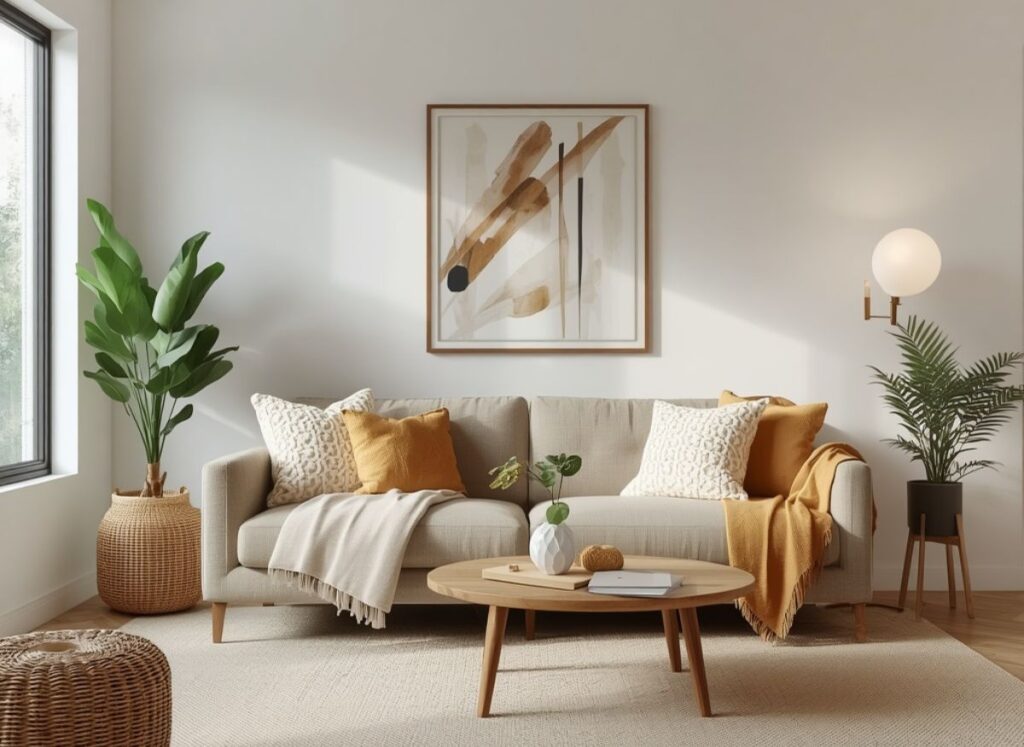
Walking into a home that feels calm, warm, and pulled together doesn’t happen by chance. It’s usually the result of a few intentional choices about color, furniture, lighting, and the small details that make a space feel lived in rather than staged. Whether you’re starting fresh in a new apartment or slowly updating a house you’ve lived in for years, having a clear set of Home Decor Ideas to work from turns an overwhelming project into a manageable one.
This guide breaks down practical Home Decor Ideas for building a cohesive look, avoiding the mistakes that leave rooms feeling unfinished, and stretching a modest budget further. Along the way, you’ll find two comparison tables to help you weigh your options, plus answers to the questions people ask most often before they start decorating.
Finding Your Decorating Foundation Before You Buy Anything
Before buying a single throw pillow, it helps to define how you want a room to function. A living room for movie nights needs a different layout than one meant for entertaining, and a bedroom for rest needs a different mood than one doubling as a home office. Skipping this step often ends with furniture that looks good alone but never quite works together.
A simple starting point is choosing three words that describe how you want a room to feel calm, warm, uncluttered, or bold, layered, and social. These words become a filter for every decision that follows. When you’re scrolling through Home Decor Ideas and exploring different interior design styles online, that filter helps you recognize which images genuinely fit your space instead of just catching your eye for a moment.
Light and traffic flow are easy to overlook but shape how a room actually feels day to day. A north-facing room reads differently in warm cream tones than in cool gray, and factoring in walking paths before buying furniture is one of the simplest Home Decor Ideas for avoiding a cramped, awkward layout.
Choosing a Color Palette That Feels Effortless
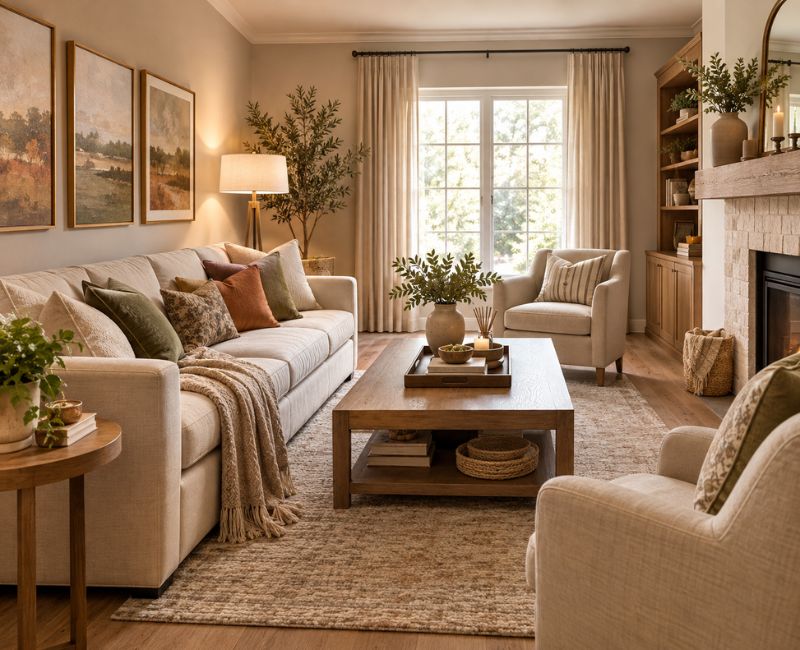
Color is usually the first thing people notice, and it’s also where many decorating plans go wrong. A palette that feels effortless is rarely built on a single color; it’s built on a relationship between a dominant tone, a secondary tone, and one or two accent colors used more sparingly. Many strong Home Decor Ideas start with this kind of 60-30-10 thinking, even when the exact ratio shifts from room to room.
Warm neutrals like greige, warm white, and soft taupe are forgiving starting points, since they pair easily with both cool and warm accents later. If you’re keeping existing furniture, pull your palette from the least flexible piece, usually a sofa or rug rather than starting with a paint chip.
Layering Textures for Added Depth
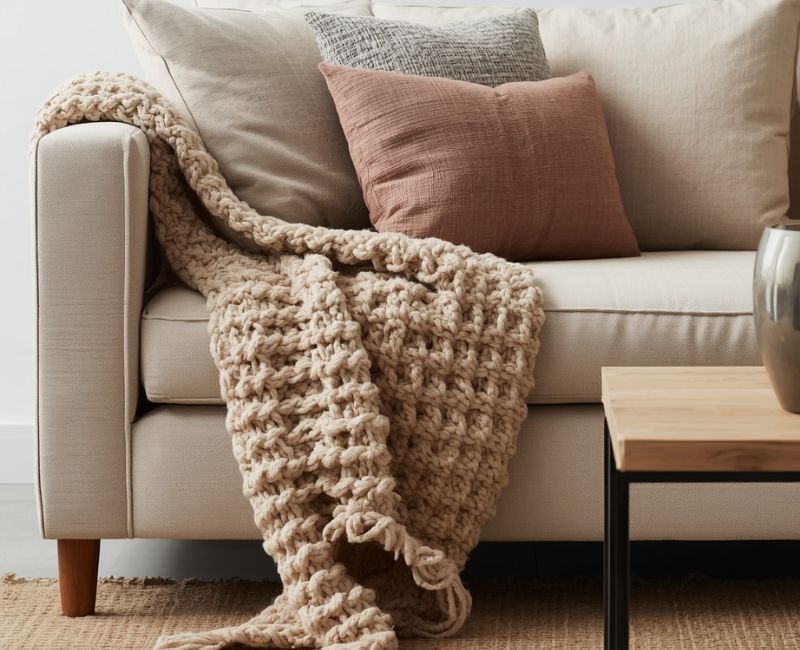
Once color is settled, texture keeps a room from feeling flat. A room in soft neutrals can still feel rich when it mixes a linen sofa, a wood coffee table, a jute rug, and a few metal or glass accents. The goal isn’t using every texture at once, just enough variation for the eye to notice beyond color alone.
Arranging Furniture So a Room Actually Works
Furniture arrangement is one of the most underrated parts of decorating, and one of the easiest to fix for free. Pushing every piece against the wall often makes a room feel larger on paper but colder in practice. Pulling the sofa away from the wall and grouping seating around a central point, like a coffee table, creates a more natural conversation area.
Scale matters just as much as placement. Oversized furniture in a small room feels cramped, while undersized pieces in a large room can make it feel empty and disconnected. Measuring your room and the pieces you’re considering before buying is one of the simplest, most practical Home Decor Ideas around, and it prevents a lot of costly returns.
Lighting Layers That Transform a Space
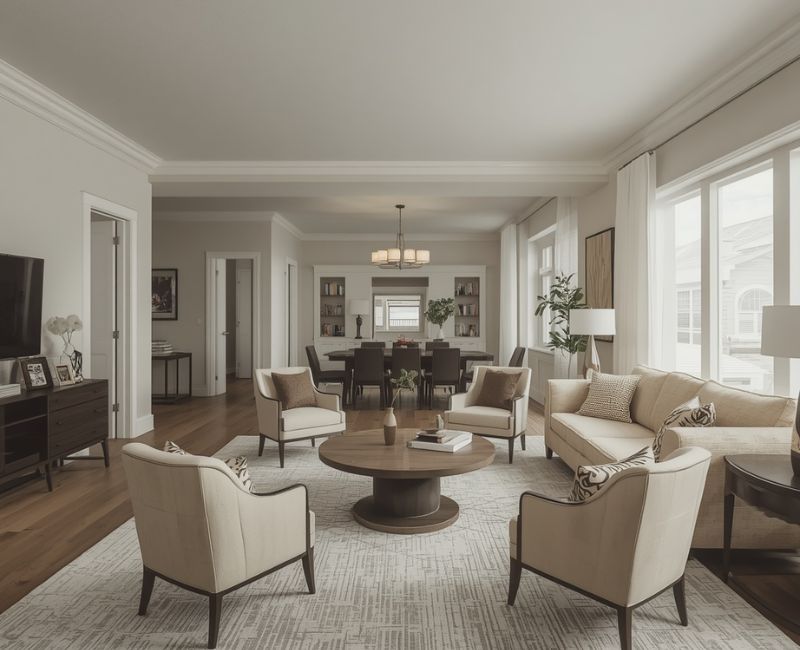
Lighting shapes a room’s mood more than almost anything else, yet it’s often treated as an afterthought. A single overhead fixture tends to feel flat and a little clinical, no matter how nice the furniture is. Layering ambient, task, and accent lighting adds real dimension and lets you adjust the mood through the day.
Among the simplest Home Decor Ideas available, swapping to warm toned bulbs generally 2700K to 3000K in living spaces and bedrooms, and adding a dimmer switch where possible, makes a noticeable difference for very little effort or cost.
| Decorating Style | Typical Color Palette | Best Suited For | Approximate Budget Level |
| Modern Minimalist | Whites, grays, black accents | Small spaces, clean-lined homes | Moderate to High |
| Farmhouse | Warm whites, natural wood tones | Family homes, rustic settings | Low to Moderate |
| Bohemian | Earth tones, layered patterns | Renters, eclectic collectors | Low to Moderate |
| Traditional | Deep neutrals, classic wood finishes | Formal living and dining rooms | Moderate to High |
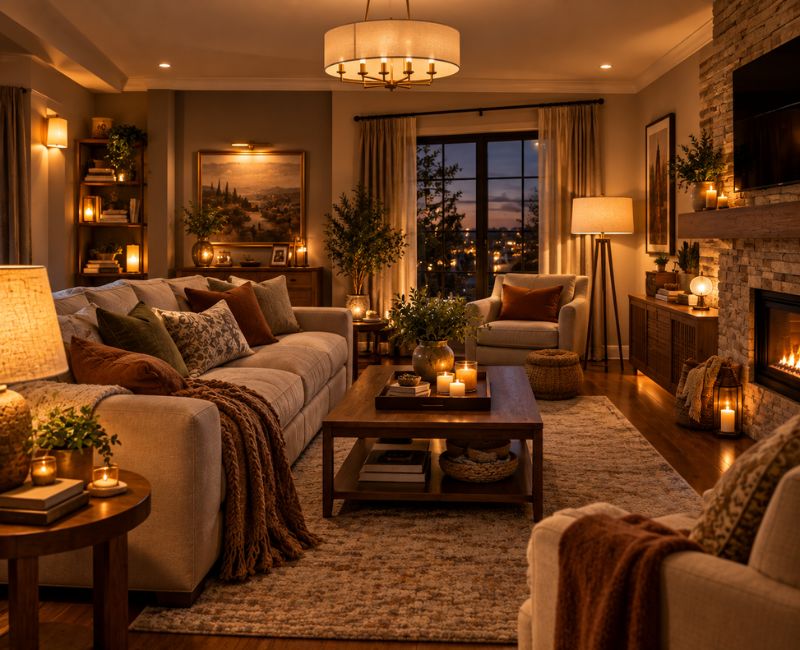
Accessories and Decorative Details That Add Personality
Once the larger pieces are in place, accessories make a room feel personal instead of like a showroom display. Books, artwork, plants, and personal collections add identity, but work best grouped thoughtfully rather than scattered evenly. Odd numbers, three candlesticks, a cluster of three prints read as more intentional than even, symmetrical arrangements.
A useful habit when browsing Home Decor Ideas is noticing which accessories repeat across a room in slightly different forms, such as a brass lamp base echoed by a brass picture frame elsewhere. This quiet repetition ties a space together without requiring a perfectly matched decor set, which often looks less interesting than a curated mix.
Creating a Cozy, Lived In Atmosphere
Coziness is often confused with clutter, but a cozy room simply combines soft textiles, warm lighting, and a few personal touches without feeling crowded. If you prefer a clean and uncluttered space, these minimalist living room ideas can help you create a cozy look without making the room feel empty.
Layering a knit throw, adding textured pillows, and swapping overhead light for lamps in the evening are small, low cost Home Decor Ideas that shift a room’s entire mood. A softly playing record or a scented candle finishes the effect, turning a photograph-ready room into one people actually want to spend time in.
Budget-Friendly Decorating Strategies
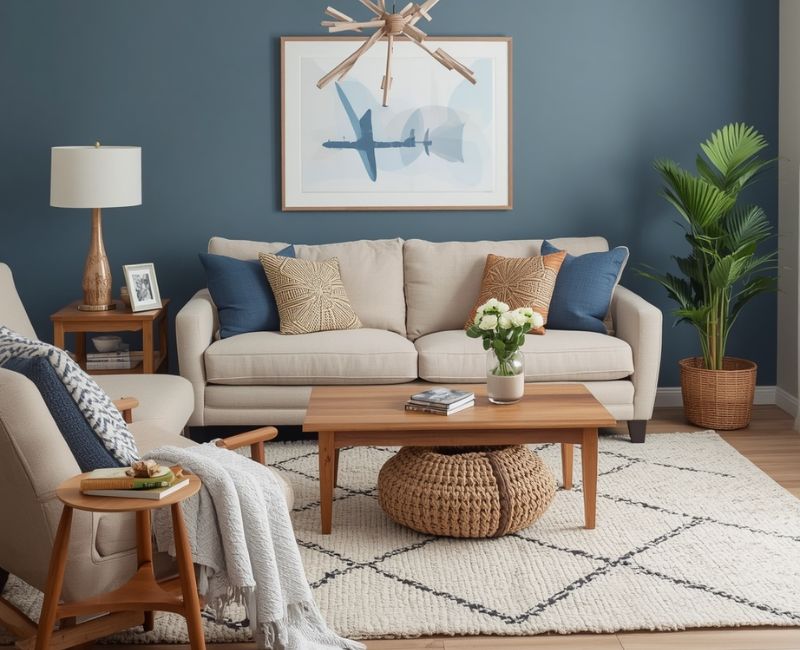
You don’t need a large budget to apply good Home Decor Ideas you need clear priorities. Spending on a few key pieces, like a well-made sofa or quality rug, while saving on accessories you’ll swap out later, produces better long-term results than spreading a budget evenly. Secondhand wood furniture can often be refreshed with paint or new hardware for a fraction of the cost of buying new. For a warm, natural look, explore these rustic home decor ideas for using wood, earthy textures, and cozy accents throughout your home.
Paint remains one of the highest-impact, lowest-cost changes available. A single accent wall or a freshly painted front door updates a room without touching the furniture at all, and rearranging what you already own is worth trying before buying anything new.
| Area to Decorate | Worth Splurging On | Fine to Save On | Reason |
| Living Room | Sofa, area rug | Throw pillows, small decor | Daily use and durability matter most |
| Bedroom | Mattress, bedding | Nightstands, lamps | Comfort items get the most wear |
| Kitchen | Lighting fixtures | Small appliances, dish towels | Fixtures affect resale and daily mood |
| Entryway | Mirror, storage bench | Wall art, hooks | High-impact focal points justify the cost |
Common Decorating Mistakes That Undermine a Beautiful Room
Even well-intentioned decorating goes wrong in predictable ways: artwork hung too high, a rug too small for the seating area, furniture out of scale, and curtains hung too close to the window frame instead of wide and high. Decorating each room in complete isolation is another common issue. A shared color family or a repeated material across rooms is one of the easiest Home Decor Ideas for making a whole home feel considered rather than disconnected.
Professional Tricks for a Polished, Finished Look
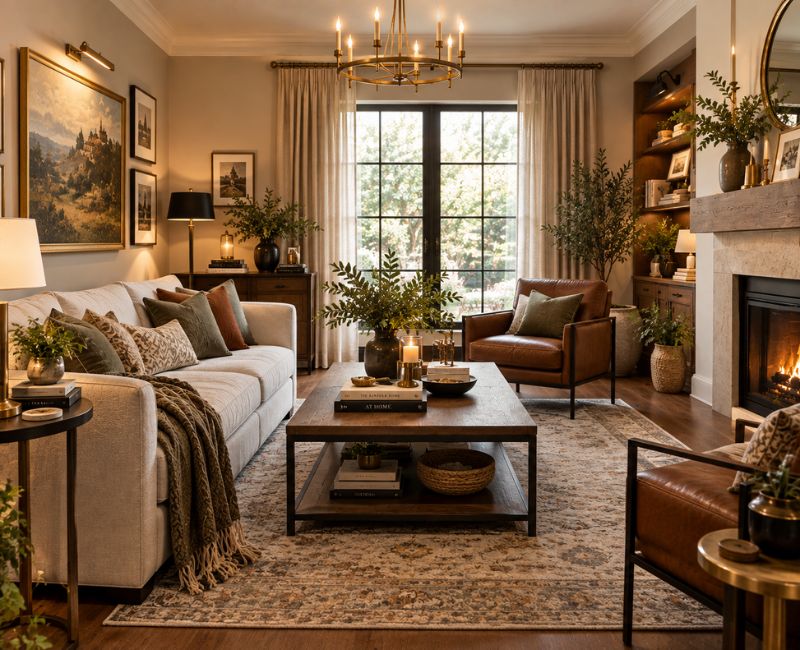
Designers rely on a handful of repeatable techniques that make rooms look intentional rather than accidental: grounding a seating area with a rug large enough for the front legs of the furniture, hanging art at eye level, and using odd-numbered groupings. Mixing metals, like brass hardware with black fixtures, also reads as more current than matching every finish exactly.
Editing matters just as much as adding. Many of the best Home Decor Ideas involve removing items from a space rather than adding more, since an overly full room can feel busy no matter how nice each piece is on its own.
Frequently Asked Questions
What Is the 70/30 Rule in Home Decorating and How Do I Use It?
The 70/30 rule suggests structuring a room so roughly 70 percent of the elements follow a consistent style or color story, while the remaining 30 percent introduces contrast or an unexpected accent. In practice, this might mean a living room built mostly around a neutral, modern palette, with 30 percent left open for a bold piece of art or a patterned rug. It keeps a room from feeling either too rigid or too chaotic.
What Is the 3-5-7 Rule in Decorating?
The 3-5-7 rule is a styling guideline for shelves and vignettes, suggesting that groupings of three, five, or seven objects look more balanced than even-numbered groupings. Odd numbers create a natural focal point that the eye finds more interesting than a mirrored arrangement, especially when the objects vary in height and shape.
How to Make Your Home Look Expensive on a Budget
The most reliable way to make a home look more expensive on a budget is focusing spending on a few high-impact areas lighting, window treatments, and hardware while keeping the rest simple. Full length curtains hung close to the ceiling and updated cabinet hardware transform a room more convincingly than many small purchases. Decluttering and properly scaling furniture also does more for a polished look than most people expect.
When Should You Give Your Home Decor a New Look?
There’s no fixed timeline, but refreshing accessories, textiles, and accent pieces every one to two years keeps a home feeling current, even while larger furniture stays in place for five to ten years. Revisiting your Home Decor Ideas seasonally, by swapping pillow covers or rotating artwork, is an easy way to update a space without a full redesign.
Can Different Interior Design Styles Work Together in One Space?
Yes, and it often produces more interesting results than sticking to one look exactly. The key is finding a connecting thread, such as a shared color palette or wood tone, so the mix feels curated rather than random transitional design essentially runs on this principle.
What Should I Decorate First When Moving Into a New Home?
Start with the rooms you use daily, such as the bedroom and living room, before guest spaces or purely decorative areas. Establishing functional basics: a comfortable bed, adequate lighting, and usable seating gives you a livable home quickly, leaving room to add finishing touches over time.
Final Thoughts
Creating a stylish, comfortable home isn’t about following every trend or spending beyond your means. It comes down to a handful of consistent principles: a cohesive color palette, furniture arranged with function and scale in mind, thoughtful lighting, and personal details that make a space feel like yours. The most successful rooms are built gradually, with intention behind each choice.
If you take one thing from these Home Decor Ideas, let it be that good decorating is more about editing and thoughtful choices than it is about spending. Start with the room you use most, apply a few ideas here, and give yourself permission to adjust as you go. Small, consistent changes add up to a home that feels genuinely put together over time.

Welcome to Cozy Escape Hub! I am Muhammad Hassaan, an AI Powered SEO and content writer with a 2 years of experience.
I help websites rank higher, grow traffic , and look amazing. My goal is to make SEO and web design simple and effective for everyone. Let’s achieve more together!