

A beautiful room that is uncomfortable to sit in has failed at its main job. The reverse is just as common: a cozy space that feels cluttered and unplanned never quite earns your affection. The best homes manage both, and the thinking behind CFA Home is built on that balance of stylish interiors and everyday ease.
Thoughtful home design matters because you live inside its decisions every day. The way a sofa faces a window, how evening light falls across a bedroom, and where your keys land when you walk in shape your mood more than any single expensive purchase. This guide covers practical, budget-friendly ideas, from choosing a design direction to making small rooms feel larger, so you can build a home that looks considered and feels welcoming.
Start With a Design Direction Before You Buy Anything

Most decorating regrets come from buying first and planning later. Before you purchase a single cushion, spend a week noticing what you respond to. Save photos of rooms you love, then look for patterns: warm woods or crisp white walls, curved furniture or clean lines, layered fabrics or bare surfaces.
A cohesive interior rarely comes from following one style strictly. It comes from a few repeated decisions, such as a limited color palette, one or two dominant materials, and a consistent level of formality. That framework is central to how CFA Home approaches room planning: decide the feeling first, then choose objects that serve it.
Try writing three words that describe how you want your home to feel, perhaps “calm, warm, uncluttered.” Use them as a filter. If a lamp or rug doesn’t fit those words, it stays in the store.
Color Schemes That Shape Mood and Space

Color is the fastest and cheapest way to change a room. Neutral colors such as warm white, greige, soft sand, and pale clay form a flexible base that keeps a home feeling timeless. Accent colors then add personality: deep green cushions, a rust-colored throw, or a navy armchair.
A reliable guideline is to divide a room into roughly sixty percent base color, thirty percent secondary shade, and ten percent accent. This gives you visual balance without needing a designer’s eye. Undertones matter too. A cool gray wall beside a cream sofa can look accidentally dull, while two warm neutrals blend easily.
Finish deserves attention as well. Matte paint softens walls and hides imperfections, while satin holds up better in hallways and kitchens where fingerprints and splashes are part of daily life.
Lighting Ideas That Make a House Feel Like Home

Lighting separates an elegant home from a flat one. Natural light is your best asset, so keep windows clear with sheer curtains and avoid placing tall furniture directly in front of them. A mirror opposite a window carries daylight deeper into the room.
For evenings, think in three layers: ambient lighting for general brightness, task lighting for reading or cooking, and accent lighting for mood. A single ceiling fixture creates harsh shadows. Add a floor lamp beside the sofa, a small table lamp on a sideboard, and warm bulbs around 2700K to create an inviting living space. Dimmer switches are among the most affordable home improvement upgrades, and they change a room’s character instantly.
Living Room Decor That Invites People to Stay
The living room carries the most expectations: entertaining, relaxing, working, and sometimes all three in one afternoon. Start with furniture arrangement. Pull the sofa a few inches off the wall and angle the seating toward conversation rather than the television. A rug large enough to sit under the front legs of every seat anchors the group and makes the room look intentional.
Building a Cozy Atmosphere With Layers
Coziness is mostly about layering. Combine a woven throw, a linen cushion, a chunky knit blanket, and one velvet accent so that no two surfaces feel the same.Place a potted plant, a few neatly stacked books, and one or two candles to create a cozy, inviting touch. The goal is a room that invites you to touch things, not just look at them. CFA Home ideas often lean on this tactile approach because it costs little and changes the feel of a room dramatically.
Bedroom Comfort and Aesthetics
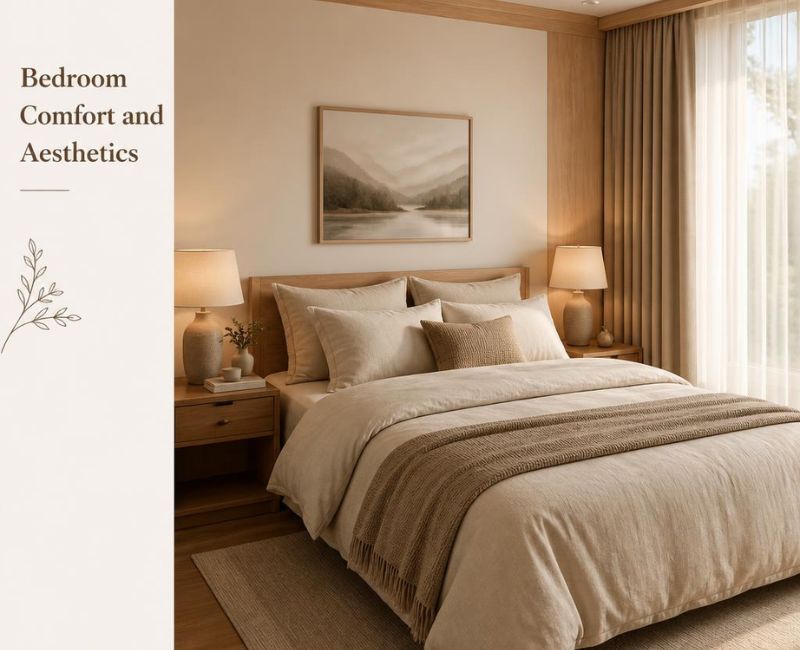
A bedroom should lower your heart rate the moment you walk in. Keep the palette quiet, choose breathable cotton or linen bedding, and put a good mattress and pillows ahead of anything decorative. Blackout curtains paired with a sheer layer give you control over morning light.
Symmetry helps here. Matching bedside tables and lamps create a visual balance the eye reads as restful. Limit surfaces to a few meaningful objects, and if clothes tend to pile up on a chair, add wall hooks or a slim valet stand so clutter has a place to go.
Natural Materials and Textures Worth Investing In
Different textures and materials bring visual richness and dimension that color by itself cannot achieve. Oak, walnut, rattan, jute, stone, wool, and linen bring warmth and age gracefully. A room full of smooth, shiny surfaces can feel cold, while a mix of matte wood, soft textiles, and a touch of metal feels layered and expensive.
Put natural materials where they are touched most: a solid wood dining table, a wool rug, linen curtains. Save lower-cost synthetic options for pieces that matter less, such as decorative baskets or picture frames.
A Room-by-Room Reference for Stylish, Comfortable Living
This table pulls the ideas together so you can scan for the area you are working on.
| Home Area | Stylish Idea | Comfort Benefit | Practical Tip |
| Entryway | Slim bench with woven baskets underneath | A seat for removing shoes and hidden storage | Add a mirror and a small tray for keys to keep surfaces clear |
| Living room | Sofa angled toward a round coffee table | Easier conversation and smoother movement | Choose rounded corners if children visit often |
| Bedroom | Layered linen bedding in two neutral tones | Breathable, temperature-friendly sleep | Keep a spare set washed so changing sheets takes minutes |
| Kitchen | One open shelf with matching jars and a plant | Daily items stay within reach | Limit the shelf to things you use weekly |
| Bathroom | Wooden stool, rolled towels, glass dispensers | A calm, spa-like feel | Use wall shelving instead of crowding the counter |
| Home office | Desk near a window with a warm task lamp | Less eye strain and better focus | Store cables and paperwork in one closed box |
Smart Furniture and Space-Saving Design
Functional spaces depend on furniture that earns its footprint. Storage ottomans, nesting tables, extendable dining tables, and wall-mounted desks add flexibility without crowding a room. In small apartments, choose pieces with exposed legs, since seeing the floor beneath furniture makes a space look more open. You can also improve everyday convenience with practical technology by learning how to Set Up a Smart Home.
Measure twice. Mark a sofa’s dimensions on the floor with painter’s tape before buying, and confirm it will fit through doors and stairwells. It sounds obvious, yet it prevents some of the most expensive mistakes in home decor. Treat this habit as part of the design itself, and build it into every CFA Home project you take on.
Making Small Rooms Feel Larger

Small room design relies on a handful of dependable tricks. Keep wall and ceiling colors close in tone, hang curtains near the ceiling to stretch the walls upward, and choose a lighter floor covering. One large piece of art usually looks calmer than several small frames. Mirrors, glass tabletops, and low-profile furniture keep sightlines open.
Vertical Storage Is Your Best Space Saver
Walls can hold far more than paint. Tall bookcases, floating shelves, and over-door hooks pull belongings upward and free the floor. Keep heavy, frequently used items on lower shelves and seasonal items higher up. Matching baskets or boxes make vertical storage look curated rather than crowded, which is a simple principle behind the CFA Home approach to compact living.
Home Organization That Protects Your Style
Even the best-decorated room falls apart under clutter. Give every category of belongings a fixed home and keep daily-use items closest at hand. Declutter by season, and donate anything you have not touched in a year.
Hidden storage, such as drawers beneath beds and closed cabinets, supports a calm look. Display decorative accessories in small groups of odd numbers, vary their heights, and leave empty space around them so each piece gets noticed. A few well-placed objects will always look better than a crowded shelf.
Mixing Decor Styles Without Losing Cohesion
Few homes belong to a single tradition. A vintage dresser beside a modern light fixture feels lively when something ties the pieces together, such as a repeated color, a shared material, or similar scale. Let one style dominate about seventy percent of the room and give a second style the remaining space for contrast.
Repetition is what creates harmony. If you introduce black metal in a lamp, echo it in a picture frame or a chair leg elsewhere. Your eye then reads the mix as deliberate rather than accidental.
Comparing Design Approaches Before You Commit
Different design styles suit different lifestyles. This comparison can help you decide which direction fits your space and habits.
| Design Option | Best For | Advantages | Potential Drawback |
| Minimalist modern | Small homes and busy households | Easy to clean and feels open | Can feel cold without added texture |
| Warm Scandinavian | Homes with limited daylight | Bright, cozy, and affordable | Light fabrics show stains quickly |
| Classic traditional | Larger rooms and formal entertaining | Timeless with rich detail | Needs more upkeep and floor space |
| Eclectic layered | Collectors and creative personalities | Highly personal and expressive | Requires editing to avoid visual chaos |
| Japandi | People who want calm and craftsmanship | Natural materials and a quiet palette | Quality pieces cost more upfront |
Budget-Friendly Upgrades With the Biggest Visual Return
You do not need a renovation to change how a home feels. Repainting one wall, swapping cabinet handles, replacing builder-grade light fixtures, adding plants, and framing prints in matching frames all lift a room quickly. For more practical home improvement inspiration, explore these Trisha Home Improvement Ideas. Thrift stores and second-hand marketplaces offer solid wood furniture at a fraction of retail price, and sanding and a fresh finish can transform it.
Spend more on items you use every day, such as your mattress, sofa, and curtains, and less on trend-driven accents. This is where a CFA Home budget mindset pays off, because it keeps money flowing toward comfort and durability instead of novelty.
Personalizing Your Home So It Feels Like Yours
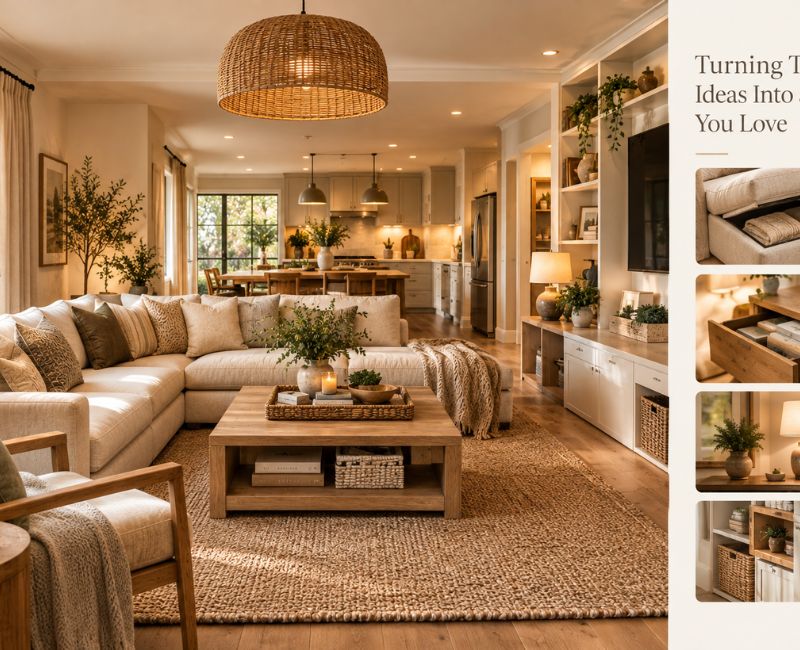
Personal style is what stops a tasteful house from feeling like a showroom. Display travel finds, children’s artwork in good frames, family heirlooms, and a favorite reading chair. Rotate items seasonally so the space keeps feeling fresh without new spending. For more creative home inspiration, explore these Cool Ideas The Home Trotters for fresh ways to give your home more personality.
Choose one signature element, such as a gallery wall, a bold rug, or an oversized plant. Then ask a simple question of every addition: does it bring me pleasure or serve a purpose? If the answer is neither, leave it out. A home that reflects your habits and memories will always feel more welcoming than one assembled from a catalog.
FAQS [Frequently Asked Questions]
How to Make Your Home Look More Expensive on a Budget?
Focus on consistency, since a limited palette, matching hardware, and good lighting make inexpensive pieces look intentional. Replace harsh bulbs with warm ones and remove clutter from visible surfaces for an immediate upgrade.
What Colors Make a Room Look Bigger and Brighter?
Soft whites, pale grays, light creams, and gentle blues reflect light and make walls feel farther away. Paint the trim and ceiling in a similar shade to blur edges and let the room feel taller.
How to Find Your Home Decorating Style?
Collect images of spaces you love and look for repeated colors, shapes, and materials, because your style lives in those patterns. Test your choice with small, low-cost items like cushions before committing to large furniture.
How to Create a Cozy Living Room Everyone Will Love?
Combine soft seating, warm lamps, and a few textured throws so there is a comfortable spot for everyone. Arrange chairs close enough for conversation and keep a basket nearby for blankets and remotes.
How to Mix and Match Home Decor Styles Without Clashing?
Anchor the room with one dominant style and connect the others through a shared color or material. Keep furniture scale similar and limit bold patterns to two per room.
How to Make Small Rooms Feel Larger With Design Tricks?
Use light colors, large mirrors, and furniture with visible legs to keep the space airy. Hang curtains high and wide so windows appear larger and the ceiling feels taller.
Final Thoughts
The strongest homes are built on a few clear decisions: a calm color palette, layered lighting, comfortable furniture placed with purpose, and storage that keeps daily life tidy. Natural textures, personal touches, and a thoughtful mix of styles add the character that no single purchase can supply. Small changes, from a new lamp to a rearranged sofa, often deliver more than a major project, which is why the CFA Home mindset favors steady, practical improvements.
Start with one room and one idea, then build from there. Balance style with comfort and function, and let your own habits guide what stays and what goes. A home that works well for the people in it will always look better than one designed only to impress.

Welcome to Cozy Escape Hub! I am Muhammad Hassaan, an AI Powered SEO and content writer with a 2 years of experience.
I help websites rank higher, grow traffic , and look amazing. My goal is to make SEO and web design simple and effective for everyone. Let’s achieve more together!