

Choosing between a popcorn ceiling vs. textured ceiling can feel confusing, especially when cost, safety, and style all matter. Both finishes add texture to a room, but they differ in appearance, cleaning, repair, and removal. In this guide, you’ll learn what each ceiling type is, how popular textures like knockdown, orange peel, and swirl compare, and what removal or new texture may cost in 2026. We also cover asbestos concerns in older homes, pros and cons, and when a smooth ceiling makes more sense. After reading this guide, you’ll be able to choose a ceiling finish that fits your style preferences and spending plan.
Stuck with a dusty, dated ceiling and unsure what to do next? You’re not alone. Many homeowners wonder whether to keep, cover, or replace their finish, and the Popcorn Ceiling vs. Textured Ceiling decision is rarely simple. Popcorn is hard to clean and patch, and in older homes it may raise asbestos concerns that make DIY removal risky. Modern textures are easier to maintain, but costs and results vary. This article breaks down the differences, realistic 2026 price estimates, safety precautions, and smooth-ceiling alternatives, so you can choose the right finish confidently and avoid costly mistakes.
1. What Is a Popcorn Ceiling?

A popcorn ceiling, also called an acoustic ceiling or cottage cheese ceiling, is a bumpy, sprayed-on finish applied to drywall. It was designed to be applied quickly and to hide flaws.
Appearance and Common Features of Popcorn Ceilings
The surface has small, rounded, irregular bumps, often in white or off-white. The texture is deep and coarse, so it casts tiny shadows and looks uneven. Many popcorn ceilings are unpainted, which makes them soft and crumbly. Some surfaces have a coat of paint that makes them more solid, but it can also make cleaning and future removal more difficult.
Why Popcorn Ceilings Became Popular
Popcorn texture became common in mid-century homes because it was cheap and fast to apply. Crews could spray it on without taping and finishing every joint, and it concealed drywall seams, nail pops, and ceiling imperfections. It also offered modest sound absorption and noise reduction, which suited apartments and busy family homes. Finish quality mattered less because the texture covered the work underneath.
2. What Is a Textured Ceiling?
“Textured ceiling” is a broad term for any ceiling finish with a pattern or surface relief. Popcorn is technically one type, but people usually use the phrase for newer, finer finishes made with drywall mud, which is joint compound thinned for spraying, troweling, or rolling. Understanding modern wall and ceiling systems can help homeowners compare finishing methods and choose suitable options for their renovation projects.
Popular Types of Textured Ceilings

Several ceiling texture patterns are common:
- Orange peel ceiling texture: a light, bumpy surface that resembles citrus skin, usually sprayed on.
- Knockdown ceiling texture: compound is sprayed on, then flattened with a trowel for a softer, mottled look.
- Swirl ceiling texture: overlapping arcs made by hand with a brush or trowel, giving a decorative, older look.
- Skip trowel and similar hand-applied styles: irregular, layered patterns that take more skill.
Why Modern Textured Ceilings Are Still Used
Textured ceilings continue to be a popular and functional finishing choice in modern homes. Texture hides minor drywall seams, small waves in the surface, and patched areas. It is also faster and less expensive than achieving a perfectly smooth finish, which requires extra sanding and several coats of compound. Today’s materials are asbestos-free, and the patterns are shallower and easier to maintain than classic popcorn.
3. Popcorn Ceiling vs. Textured Ceiling: Key Differences
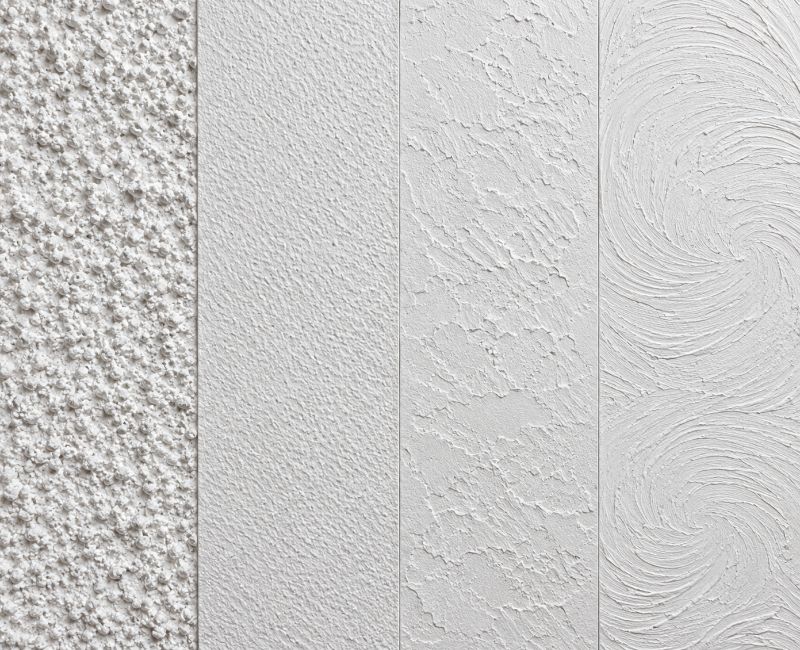
The main difference is texture depth and how the finish behaves over time. Popcorn is thick and absorbent. Modern textured finishes are thinner, harder, and more uniform.
Appearance and Texture Depth
Popcorn is the most pronounced finish and tends to look dated. Orange peel is subtle, knockdown is moderate, and swirl or skip trowel patterns are more decorative. Interior design trends have moved toward lighter textures or smooth surfaces, so a deep popcorn finish stands out in a renovated home.
Cleaning and Maintenance
Popcorn ceiling cleaning is difficult. The bumps trap dust accumulation, cobwebs, and cooking residue, and the surface can flake if rubbed or wetted. Orange peel and knockdown surfaces are shallower and usually tolerate light dusting with a soft brush or dry microfiber duster. Painted textured ceilings also tolerate gentle wiping better than raw popcorn.
Durability and Repair
Popcorn is fragile. Accidental impacts or water damage can create noticeable blemishes, and repaired popcorn ceilings often show visible differences from the surrounding surface. Modern textures are harder because they are compound-based, and textured ceiling repair is usually easier to match, though still not always invisible.
Light Reflection and Room Appearance
Deep bumps scatter light and produce shadows, which can make a room feel lower and dingier. Light reflection is better with shallow textures and best with smooth ceilings. In rooms with strong side lighting or recessed fixtures, heavier textures can look more noticeable.
| Feature | Popcorn Ceiling | Modern Textured Ceiling |
| Appearance | Coarse, bumpy, often looks dated | Ranges from subtle (orange peel) to decorative (swirl) |
| Materials | Sprayed acoustic material, often polystyrene or paper-based in newer versions | Drywall mud or joint compound, sprayed or hand-applied |
| Cleaning | Difficult; traps dust and can flake | Easier; light dusting and gentle wiping |
| Repair | Patches are hard to blend | Easier to patch and match, with skill |
| Sound absorption | Moderate; helps with some noise reduction | Slight; mostly cosmetic |
| Asbestos considerations | Older ceilings may contain it; testing needed | New materials are asbestos-free; older textures should still be tested |
| Cost | Cheaper to install; removal can be costly | Moderate to apply; cost varies by pattern |
| Suitability | Older homes, budget fixes, noise concerns | Most homes wanting low-maintenance ceiling finishes |
4. Popcorn vs. Textured Ceiling: Side-by-Side Comparison5. Popcorn Ceiling vs. Textured Ceiling: Pros and Cons
Pros and Cons of Popcorn Ceilings
Pros
- Hides drywall seams, nail pops, and uneven surfaces.
- Offers some sound absorption and improved room acoustics.
- Inexpensive to leave in place if the ceiling is intact.
Cons
- Collects dust and is hard to clean.
- Damages easily and is hard to patch invisibly.
- Looks dated to many buyers.
- Older versions may contain asbestos, which complicates removal.
Pros and Cons of Modern Textured Ceilings
Pros
- Conceals imperfections without the look of heavy popcorn.
- Easier to clean, paint, and repair.
- Many patterns to suit different homes.
Cons
- Still holds some dust compared with a smooth finish.
- Removing it later requires scraping or skim coating.
- Matching an existing pattern during repairs takes skill.
6. Asbestos Risks in Older Popcorn Ceilings
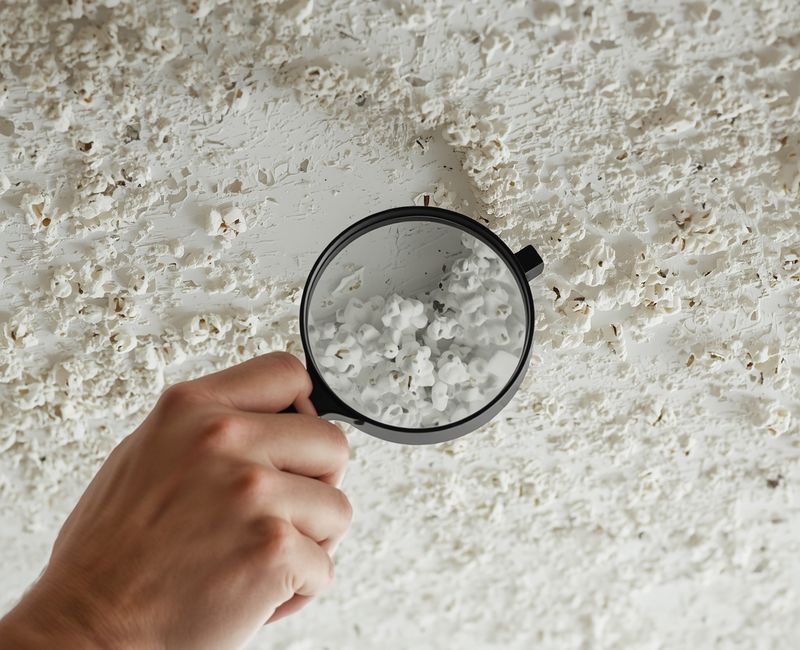
Some older popcorn ceilings contain asbestos, a mineral once added to texture materials for strength and fire resistance. Federal rules restricted spray-applied asbestos ceiling products starting in 1978, but existing stock could still be used, so some ceilings installed into the early 1980s may contain it. Homes built before the mid-1980s deserve extra caution.
You cannot determine whether asbestos is present or absent simply by looking at the ceiling. A ceiling that looks identical to a safe one may contain fibers, so the only reliable answer comes from asbestos testing: a small sample analyzed by an accredited laboratory. Testing is often done by a qualified inspector, since taking the sample itself can disturb the material.
The danger comes from disturbance. Scraping, sanding, drilling, or breaking up suspected asbestos-containing material can release asbestos fibers into the air, and inhaled fibers are linked to serious lung disease. If the ceiling is intact and undisturbed, the risk is generally lower.
Do not dry-scrape or sand a ceiling of unknown status. If testing is positive, options include leaving it undisturbed, encapsulating it, covering it, or hiring a licensed asbestos abatement contractor for professional removal. Local rules for testing and disposal vary, so check requirements before starting any work.
7. Popcorn Ceiling vs. Textured Ceiling: Cost in 2026
Prices vary widely, and the figures below are rough national estimates, not contractor quotes. Get several local written bids before budgeting.
Cost to Remove a Popcorn Ceiling

Popcorn ceiling removal cost for an asbestos-free ceiling commonly falls around $1 to $3.50 per square foot for scraping, cleanup, and disposal. This often excludes skim coating, repainting, and new texture. Where asbestos is confirmed, abatement is much higher, commonly several times the standard rate, because it requires containment, protective equipment, and regulated disposal.
Cost to Apply a New Textured Ceiling
Textured ceiling cost for applying orange peel or knockdown on a prepared surface is often about $1 to $2.50 per square foot. Hand-applied patterns such as swirl can cost more because they take longer. Ceiling skim coating, which smooths the surface with a thin layer of joint compound, adds its own labor and material cost.
| Work Item | Typical Estimate (per sq ft) | Notes |
| Popcorn removal (asbestos-free) | 1.00–3.50 | Scraping, protection, cleanup, basic disposal |
| Asbestos testing | Often a few hundred dollars per job | Priced per sample or per visit, not per square foot |
| Asbestos abatement | Roughly 3–15 | Wide range; depends on method, containment, and region |
| Skim coating / surface prep | Roughly 1–3 | Depends on ceiling condition and number of coats |
| New texture (orange peel, knockdown) | 1.00–2.50 | Hand-applied styles may cost more |
| Ceiling texture painting | Roughly 0.60–1.50 | Primer and paint; higher for high ceilings |
Total price depends on square footage, room size, ceiling height, labor rates, ceiling condition, geographic location, and materials. Water damage, drywall seams that need taping, and large patches raise costs. Smaller rooms often cost more per square foot because setup time is similar to larger jobs. Treat every figure here as a planning estimate for your home renovation budget, not a quote.
8. Cleaning, Painting, and Repairing Ceiling Textures
How to Clean and Paint a Popcorn Ceiling
Only clean or paint a popcorn ceiling after confirming asbestos is not present or that testing has been done. For cleaning, vacuum gently with a soft brush attachment or use a dry microfiber duster. Avoid water, which can loosen the texture, and avoid rubbing.
Painting is possible but has limits. A paint roller can pull off loose material or leave clumps, so many people use a sprayer or a thick-nap roller with light pressure. Prime stains first, since water marks bleed through. Painting makes later removal harder because the texture becomes bonded and harder to scrape.
How to Repair a Damaged Textured Ceiling
Minor surface issues, including tiny holes and peeling areas, can often be repaired with joint compound and a texture spray that closely matches the existing ceiling. Clean the area, apply compound, and blend the pattern with a sponge, brush, or knockdown trowel to match nearby texture. Matching is often imperfect, especially on popcorn.
Call a professional when the damage is large, when sagging suggests loose drywall, or when stains point to a leak. Treat the underlying water damage first, because covering it will not stop it. Never sand or scrape a suspect older ceiling before testing.
9. Popcorn Ceiling vs. Smooth Ceiling: Which Looks Better?

Many homeowners prefer a smooth ceiling because it looks cleaner and reflects light evenly. Smooth also supports modern lighting and bold paint colors, and it is easier to dust. However, smooth ceilings show every flaw. Seams, nail pops, and waves become visible, so the surface needs careful drywall finishing or a full skim coat.
Textured ceilings forgive imperfect drywall, cost less to prepare, and require less skill. They hold more dust and make future changes harder. In smooth ceiling vs. textured ceiling comparisons, smooth usually offers broader design flexibility and stronger buyer appeal in updated homes, while light texture works well when budget or surface condition matters. Homeowners planning broader design updates can also explore eco-friendly wood alternatives for other areas of the home.
10. Which Ceiling Finish Should You Choose?
The right answer depends on condition, budget, safety, and resale plans.
When to Keep a Popcorn Ceiling
Keep it when the ceiling is intact, the budget is tight, or asbestos has been confirmed and the material is stable. Keeping it can also make sense if you value its sound absorption. Painting or professional encapsulation can refresh the look without disturbing it much.
When to Choose a Modern Textured Ceiling
Choose modern texture when you want easier cleaning and repairs and a softer look, or when the drywall has seam problems that texture can hide. Orange peel or light knockdown suits most homes, and these popcorn ceiling alternatives avoid the heavy, dated appearance. Prepainted steel roofing can also be worth considering when planning other parts of a home renovation, especially when durability and exterior appearance are important.
When to Choose a Smooth Ceiling
Choose smooth if you are renovating extensively, want a contemporary look, or plan to sell and want the strongest first impression. Expect higher prep costs and a need for skilled finishing.
FAQs
Why is the popcorn ceiling not popular anymore?
Many homebuyers consider popcorn ceilings outdated, and their uneven surfaces collect dust and cobwebs, making regular cleaning more challenging. Smooth and lightly textured finishes suit modern interior design trends better, and asbestos concerns in older homes have also reduced their appeal.
What are the key differences between a popcorn ceiling and a stucco ceiling?
A popcorn ceiling is a soft, bumpy, sprayed-on acoustic finish, while a stucco-style ceiling is a harder, compound-based texture that is troweled or sprayed on. Stucco texture is more durable and easier to paint and repair, whereas popcorn is lighter, more fragile, and absorbs more sound.
What are the negatives of popcorn ceilings?
Popcorn ceilings collect dust, are difficult to clean, and are hard to patch so the repair blends in. They can flake or stain from water damage, and older ones may contain asbestos, which makes scraping or removal riskier and more expensive.
What is the point of a textured ceiling?
A textured ceiling hides drywall seams, nail pops, and minor surface flaws without the extra labor of a perfectly smooth finish. It can also add visual interest and, in some cases, slightly improve sound absorption.
Why are people removing popcorn ceilings?
Homeowners remove them to update the look, make rooms feel brighter and cleaner, and simplify cleaning and repainting. Others want to avoid dust buildup, repair stained areas, or prepare the home for sale, though removal costs and asbestos testing should be considered first.
Is it safe to live in a house with popcorn ceilings?
Usually yes, if the ceiling is intact and undisturbed, because the risk comes mainly from releasing fibers during scraping, sanding, or damage. In homes built before the mid-1980s, have the ceiling tested by a qualified professional before any renovation work.
Conclusion
Popcorn ceilings offer low cost and some sound absorption, but they collect dust, damage easily, and may involve asbestos in older homes. Modern textured ceilings balance appearance, maintenance, and cost, while smooth ceilings look cleanest but need more careful finishing. Test older ceilings before any work. Keep popcorn if it is intact and budget matters; choose light texture for practical upkeep, and choose smooth for a modern renovation.

Welcome to Cozy Escape Hub! I am Muhammad Hassaan, an AI Powered SEO and content writer with a 2 years of experience.
I help websites rank higher, grow traffic , and look amazing. My goal is to make SEO and web design simple and effective for everyone. Let’s achieve more together!