
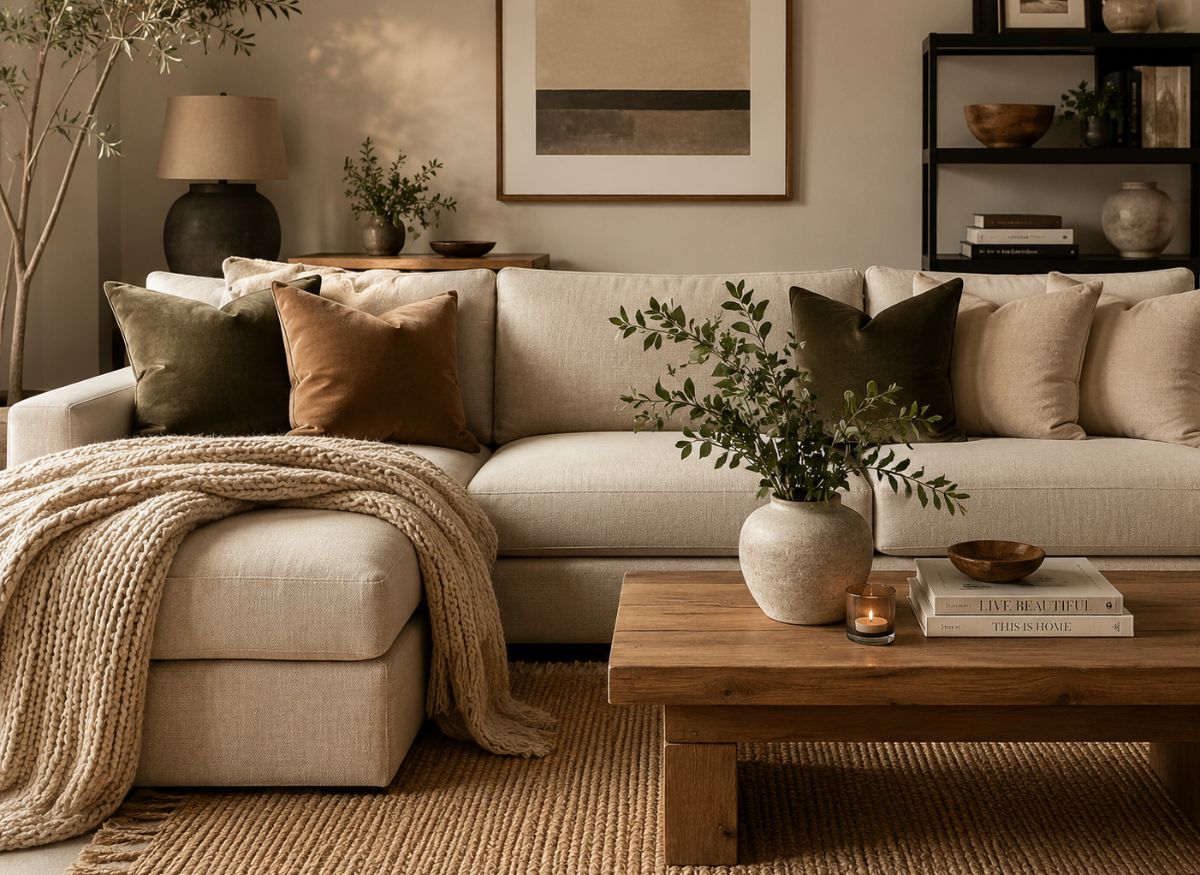
A beautiful living room is about more than furniture it’s about The Art of Organizing Textures. By combining fabrics, natural materials, and finishes, you can create a warm, inviting, and stylish space. If you’re designing a clean and clutter-free lounge, explore our guide on Minimalist Living Room Ideas to learn how simplicity and texture work together perfectly.
Whether your style is modern, farmhouse, Scandinavian, or traditional, learning The Art of Organizing Textures helps transform an ordinary sofa into the focal point of your lounge. In this guide, you’ll discover five simple sofa styling hacks to create a cozy, balanced, and professionally designed living room.
Why Texture Matters in Interior Design
Texture is one of the most overlooked elements of home decorating. Yet, it has the power to make a room feel cozy, elegant, spacious, or luxurious.
Think about walking into two living rooms painted the same color. One feels flat and boring. The other feels warm and welcoming. The difference usually comes from texture.
Texture refers to how surfaces look and feel. Some are soft, while others are rough, smooth, shiny, or woven.
Common textures include:
- Velvet
- Cotton
- Linen
- Wool
- Faux fur
- Leather
- Wood
- Stone
- Metal
- Rattan
- Jute
When these materials are combined thoughtfully, they create visual interest without overwhelming the room.
Benefits of Using Multiple Textures
- Makes the room feel more inviting.
- Creates visual depth.
- Adds warmth without adding clutter.
- Helps highlight your furniture.
- Gives your lounge a professionally styled appearance.
Understanding The Art of Organizing Textures
What Is The Art of Organizing Textures?
The Art of Organizing Textures is the process of combining different materials, fabrics, and finishes to create a balanced and visually appealing room.
Instead of buying expensive furniture, professional interior designers often focus on layering textures because it instantly upgrades a space.
Imagine a sofa with:
- Linen cushions
- Velvet accent pillows
- Chunky knit throw blanket
- Wooden coffee table
- Woven basket
- Soft area rug
Each item has a different texture, yet together they create harmony.
The goal isn’t to use as many textures as possible. Instead, it’s about selecting textures that complement each other while maintaining balance.
Key Principles
- Mix soft and structured materials.
- Combine natural and modern finishes.
- Repeat textures throughout the room.
- Keep the color palette consistent.
- Allow one texture to become the focal point.
Following these simple principles helps your lounge feel cohesive instead of chaotic.
Benefits of Layering Different Textures
Many homeowners assume texture is only about decoration. In reality, it also changes how a room feels emotionally.
A textured room often feels:
- Relaxing
- Comfortable
- Welcoming
- Luxurious
- Balanced
Texture Creates Depth
Without texture, even expensive furniture can appear flat.
For example:
Instead of placing one plain cushion on a sofa, combine:
- Smooth cotton
- Ribbed knit
- Soft velvet
- Faux fur
The combination catches light differently, making the sofa look richer and more inviting.
Texture Improves Comfort
Soft materials naturally encourage people to relax.
Adding:
- Plush blankets
- Knit throws
- Soft pillows
- Thick rugs
makes your lounge more enjoyable for reading, watching TV, or spending time with family.
Texture Works in Every Style
No matter your decorating style, texture plays an important role.
For example:
Modern Homes
- Bouclé
- Matte ceramics
- Linen
- Light wood
Farmhouse Style
- Cotton
- Woven baskets
- Reclaimed wood
- Chunky knit blankets
Scandinavian Design
- Wool
- Linen
- Oak furniture
- Soft neutral fabrics
Luxury Interiors
- Velvet
- Marble
- Brass
- Silk accents
Hack 1: Start with a Neutral Sofa Base
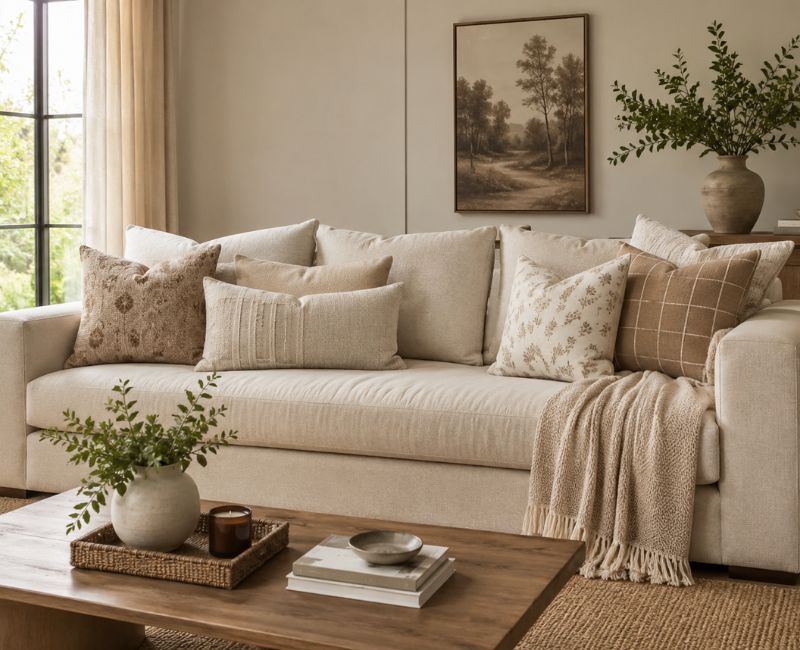
A neutral sofa provides the perfect foundation for layering textures.
Colors such as:
- White
- Cream
- Beige
- Gray
- Taupe
- Light brown
allow decorative accessories to stand out without making the room feel busy.
Why professionals love neutral sofas:
- Easy to update seasonally.
- Matches almost any decorating style.
- Makes colorful pillows pop.
- Creates a timeless appearance.
- Works with changing trends.
How to Build Around a Neutral Sofa
Begin with one large textured throw blanket.
Next, add two larger pillows in a soft woven fabric.
Finally, finish with one or two smaller accent pillows in a richer material such as velvet or boucle.
This creates depth while maintaining balance.
Designer Tip
Choose one dominant color family and introduce different shades rather than many unrelated colors.
For example:
- Cream
- Sand
- Beige
- Camel
- Chocolate brown
The room instantly feels calm and cohesive.
Hack 2: Layer Throw Pillows Like a Designer
The Art of Organizing Textures Begins with Smart Pillow Layering
Throw pillows are one of the easiest ways to introduce texture without replacing furniture.
Rather than using identical pillows, mix different materials while keeping the color palette coordinated.
A simple designer formula is:
- Two large pillows (22″)
- Two medium pillows (20″)
- One lumbar pillow
Mix Different Fabrics
Try combining:
- Linen
- Velvet
- Bouclé
- Cotton
- Knit
- Faux fur
Each fabric reflects light differently, giving your sofa more depth.
Balance Patterns Carefully
Patterns should complement textures rather than compete with them.
A good combination includes:
- One solid pillow
- One subtle stripe
- One geometric pattern
- One woven texture
This creates variety without making the sofa appear cluttered.
Avoid Overcrowding
Too many pillows reduce comfort.
Instead, leave enough seating space so your sofa remains practical as well as stylish.
Hack 3: Add Cozy Throws for Warmth and Movement
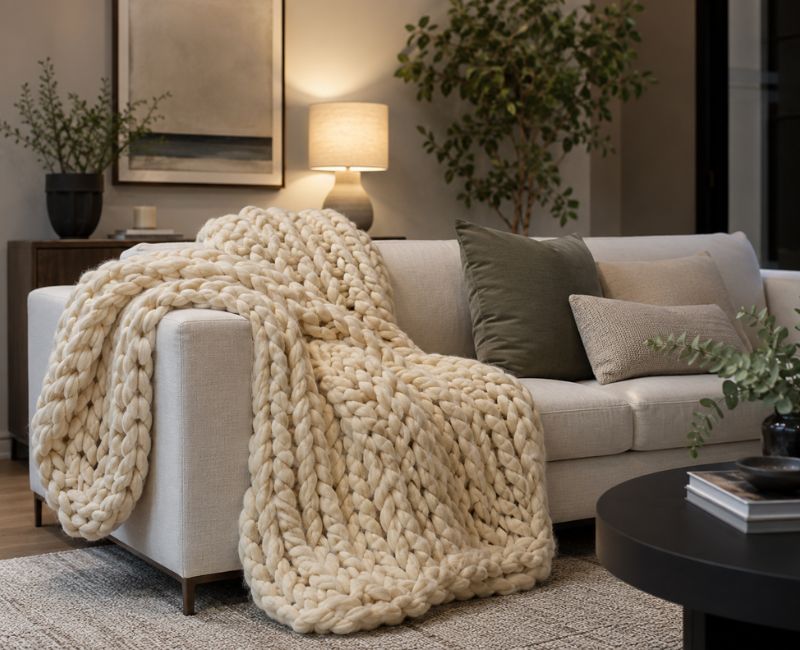
A throw blanket is much more than a practical accessory. It introduces softness, creates movement, and makes your lounge feel lived in. When chosen carefully, a throw becomes one of the easiest ways to master The Art of Organizing Textures.
Unlike large furniture, throws are affordable and easy to swap with the seasons. This means you can refresh your living room without buying a new sofa.
Choose the Right Fabric
Different fabrics create different moods.
For a cozy look:
- Chunky knit
- Wool
- Fleece
For a modern style:
- Linen
- Cotton
- Lightweight woven throws
For a luxurious touch:
- Cashmere
- Velvet
- Faux fur
The best choice depends on your lifestyle. If you have children or pets, durable cotton blends are often easier to clean.
How to Style a Throw
Avoid folding it into a perfect rectangle. Instead, let it look natural.
Try one of these methods:
- Drape it casually over one sofa arm.
- Fold it neatly across the backrest.
- Place it over one corner of the seat.
- Layer two lightweight throws for extra texture.
A relaxed arrangement makes the room feel welcoming instead of overly formal.
Seasonal Styling Ideas
Rotate your throws throughout the year.
Spring
- Cotton
- Linen
- Soft pastel colors
Summer
- Lightweight woven blankets
- White or cream fabrics
Autumn
- Rust
- Olive green
- Burnt orange
- Chunky knits
Winter
- Faux fur
- Thick wool
- Deep charcoal
- Forest green
- Burgundy
Changing just one throw can completely refresh your lounge.
Hack 4: Mix Natural Materials Around Your Sofa
The Art of Organizing Textures with Wood, Rattan, and Stone
Texture isn’t limited to fabric. The furniture and décor surrounding your sofa also play a major role.
Natural materials help balance soft textiles and prevent the room from feeling one dimensional.If you love this warm and inviting style, explore our Farmhouse Home Decor guide for more ideas on decorating with reclaimed wood, woven baskets, cozy textiles, and timeless farmhouse accents.
Consider adding:
- Wooden coffee tables
- Rattan baskets
- Bamboo trays
- Woven storage boxes
- Stone planters
- Ceramic vases
- Marble coasters
Each item contributes a unique surface that enhances the overall design.
Follow the “Three Texture Rule”
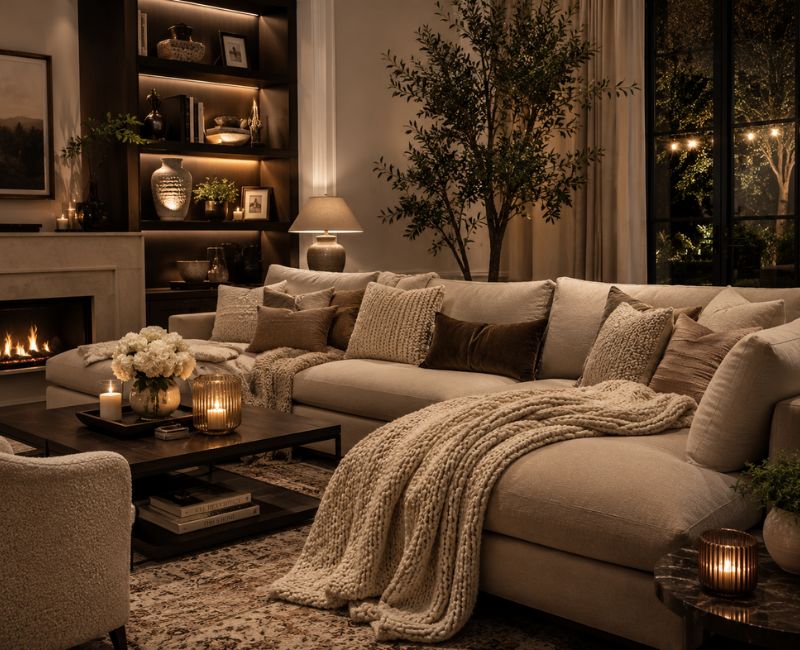
Interior designers often combine at least three different texture groups.
For example:
Soft
- Velvet pillows
- Knit blankets
Natural
- Oak furniture
- Jute rugs
- Woven baskets
Smooth
- Glass lamps
- Ceramic vases
- Metal frames
This combination creates harmony while keeping the room visually interesting.
Bring Nature Indoors
Plants add another layer of texture.
Easy indoor plants include:
- Snake Plant
- Pothos
- ZZ Plant
- Peace Lily
- Rubber Plant
Place plants in woven baskets or textured ceramic pots to reinforce the layered look.
Hack 5: Create Visual Balance with Texture Placement
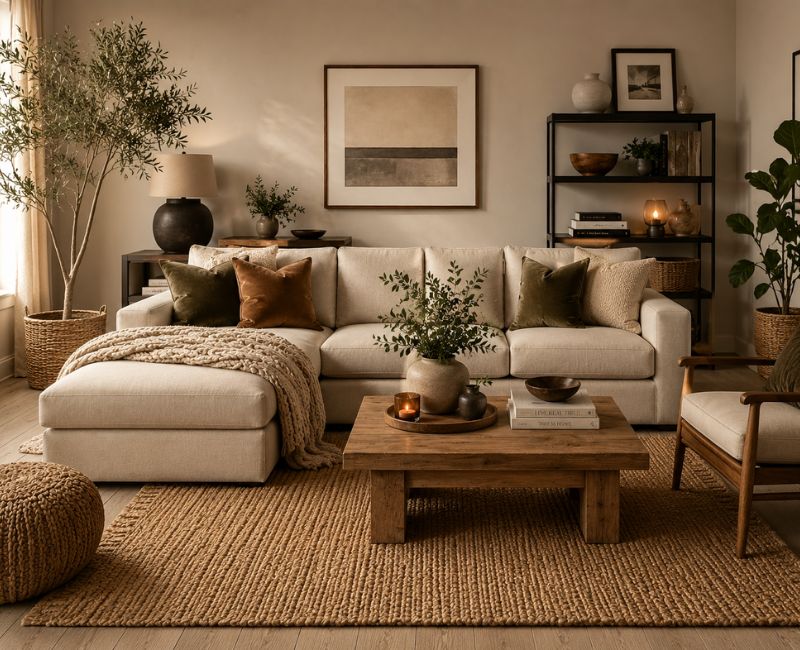
Many homeowners buy beautiful décor but place everything in one area.
The result is an unbalanced room.
Instead, spread textures evenly throughout the space.
Think in Layers
Imagine your room in three levels.
Floor Level
Include:
- Area rug
- Basket
- Ottoman
Sofa Level
Add:
- Pillows
- Throw blanket
Eye Level
Finish with:
- Wall art
- Floating shelves
- Curtains
- Plants
- Lamps
This layered approach naturally guides the eye around the room.
Repeat Textures
Repeating a texture creates unity.
For example:
If your sofa has linen pillows, repeat linen with:
- Curtains
- Lampshades
- Table runners
If your coffee table is wooden, introduce wood again through:
- Picture frames
- Shelves
- Decorative bowls
Repeating textures makes the room feel intentionally designed.
Practical Tips for Styling Your Sofa
Small changes often create the biggest impact.
Here are practical ways to improve your lounge today:
- Choose one main color palette before buying accessories.
- Mix at least three fabric types.
- Use odd numbers of decorative objects.
- Add greenery for a fresh look.
- Layer different pillow sizes.
- Include one statement texture.
- Leave enough empty space to avoid clutter.
- Refresh accessories each season.
- Invest in quality cushions rather than buying many inexpensive ones.
- Step back and evaluate the room from different angles.
Common Mistakes to Avoid
Even beautiful décor can lose its impact if textures are not balanced.
Using Too Many Patterns
Busy prints compete for attention.
Instead, combine one bold pattern with several subtle textures.
Ignoring Scale
Tiny cushions on a large sofa look out of proportion.
Use a mix of large, medium, and lumbar pillows.
Choosing Everything in One Fabric
A sofa covered only in cotton can appear flat.
Mix:
- Linen
- Velvet
- Knit
- Leather
- Bouclé
to create depth.
Forgetting Contrast
Light furniture benefits from darker accent pieces, while dark sofas often look better with lighter cushions and throws.
Contrast keeps the room visually engaging.
Overdecorating
More accessories don’t always mean better design.
Leave breathing room so each decorative item stands out.
Expert Tips for a Professionally Styled Lounge
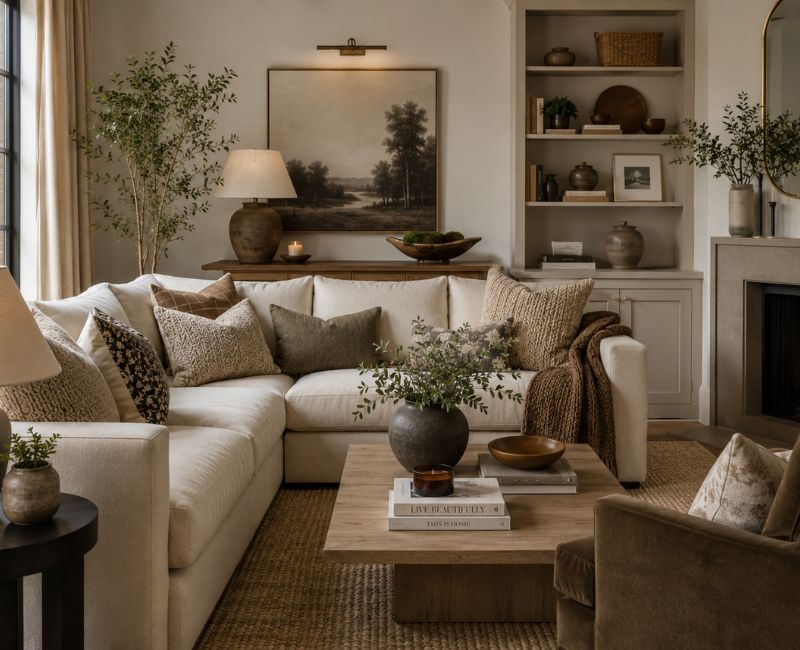
Interior designers rely on a few timeless techniques.
Work in Groups of Three
Decorate coffee tables using:
- A candle
- A small plant
- A stack of books
This arrangement feels balanced and natural.
Combine Different Shapes
Avoid using only square cushions.
Mix:
- Square pillows
- Rectangular lumbar cushions
- Round poufs
- Cylindrical bolsters
Different shapes add another layer of visual interest.
Mix Matte and Shiny Finishes
Balance soft fabrics with reflective accents like:
- Brass
- Glass
- Polished metal
- Mirrors
The contrast makes the room feel brighter and more dynamic.
Invest in Quality Basics
A durable sofa, comfortable cushions, and a well-made rug provide a stronger foundation than buying many trendy accessories.
Refresh Without Overspending
Update your lounge by replacing:
- Pillow covers
- Throws
- Decorative trays
- Candle holders
- Artwork
These affordable changes can make the room feel completely new.
Frequently Asked Questions (FAQs)
1. What is The Art of Organizing Textures?
It is the process of combining different materials, fabrics, and finishes to create a balanced, comfortable, and visually appealing room.
2. How many textures should I use in a living room?
Most designers recommend using three to five complementary textures to create depth without overwhelming the space.
3. Which sofa color works best for layering textures?
Neutral colors such as beige, cream, gray, taupe, and soft white provide the most flexibility for adding textured accessories.
4. Can I mix velvet and linen?
Yes. Velvet adds richness, while linen offers a relaxed feel. Together they create attractive contrast.
5. Are textured rooms suitable for small spaces?
Absolutely. Layering textures can make a small room feel warmer and more inviting. Just avoid excessive accessories.
6. How often should I update my sofa styling?
Refreshing pillows, throws, or small decorative items every season keeps your living room looking current without major expense.
7. What is the biggest mistake when styling a sofa?
Using too many matching accessories. Mixing complementary fabrics, shapes, and finishes creates a more natural and professionally styled look.
8. Can I use bold colors with layered textures?
Yes. Choose one or two bold accent colors and balance them with neutral tones so the room feels cohesive rather than overwhelming.
Conclusion
Mastering The Art of Organizing Textures doesn’t require expensive furniture or a complete home makeover. By starting with a neutral sofa, layering pillows thoughtfully, adding cozy throws, mixing natural materials, and balancing textures throughout the room, you can create a lounge that feels stylish, comfortable, and inviting.
Remember, great interior design is about balance rather than excess. Small, intentional updates often make the biggest difference. Experiment with different fabrics, finishes, and accessories until your living room reflects your personality while remaining functional for everyday life.

Welcome to Cozy Escape Hub! I am Muhammad Hassaan, an AI Powered SEO and content writer with a 2 years of experience.
I help websites rank higher, grow traffic , and look amazing. My goal is to make SEO and web design simple and effective for everyone. Let’s achieve more together!