
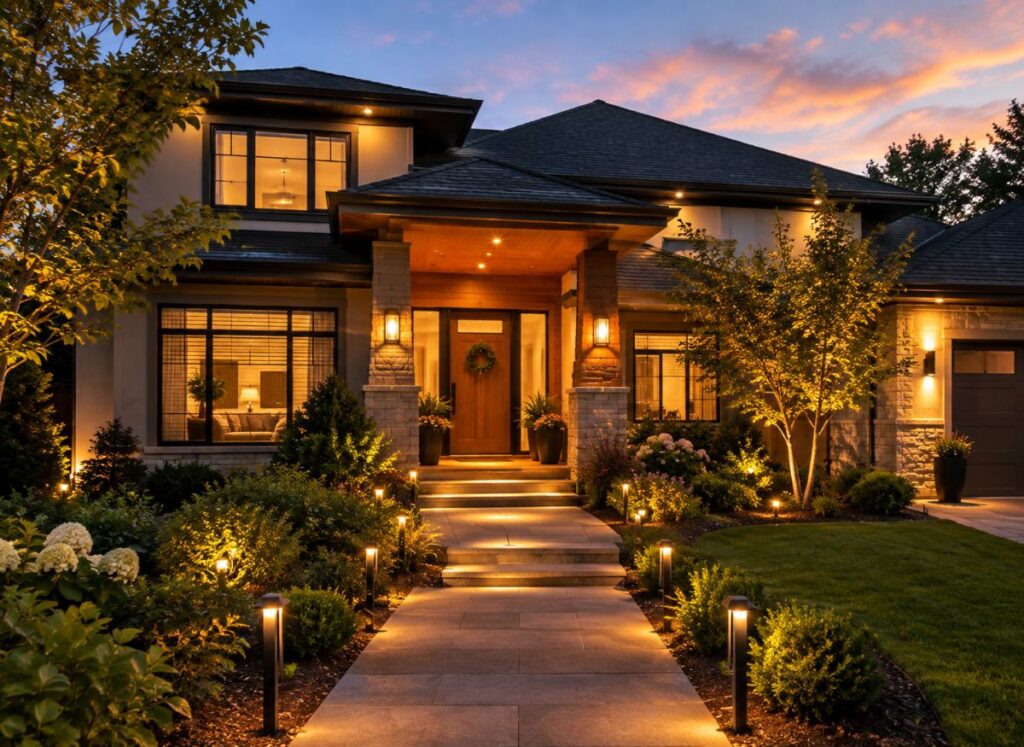
When homeowners improve their property’s exterior, they often focus on landscaping, paint colors, or hardscaping. Lighting tends to be an afterthought, chosen quickly and installed without much planning. Yet the fixtures illuminating your porch, walkway, and backyard shape how your home looks after sunset just as much as any daytime design choice. Matching Outdoor Lights to your property’s architectural style and layout isn’t simply a cosmetic preference; it directly affects how welcoming, safe, and cohesive your home appears to visitors and passersby.
Many people don’t realize how much a mismatched collection of exterior lights can undercut an otherwise well-maintained home. A modern pendant beside a traditional lantern-style sconce, or bright white bulbs clashing with warm-toned path lights, creates visual noise instead of harmony. Thinking through Matching Outdoor Lights early helps you avoid these inconsistencies while addressing safety, visibility, and long-term maintenance.
How Exterior Lighting Shapes First Impressions
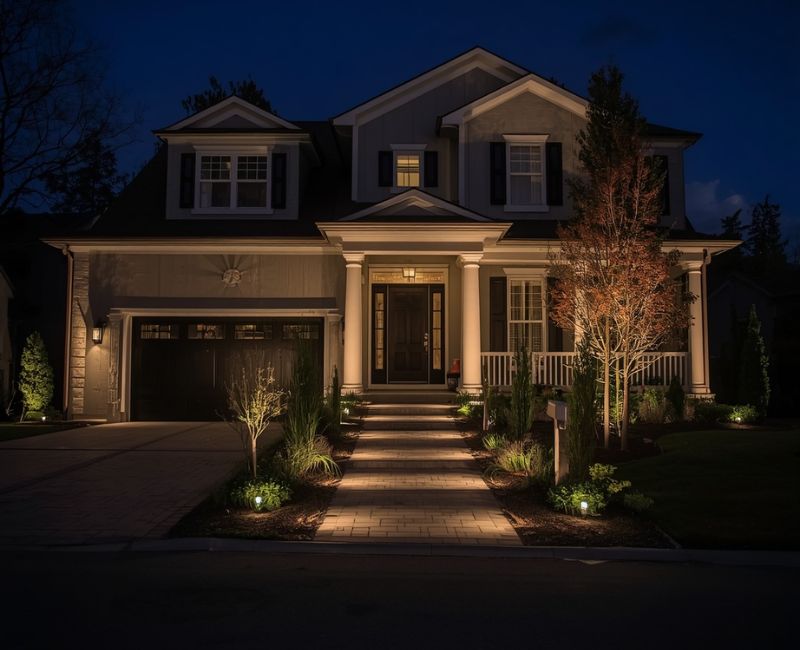
Curb appeal is often discussed in terms of daylight hours, but especially in colder months, your home gets viewed after dark far more often than people realize. Guests arriving for dinner, delivery drivers, and neighbors walking by all form impressions based on what they see under your exterior lights.
A house with warm, well-placed illumination along the entry and walkway signals care and intentionality. One with a jarring mix of fixture styles, colors, and brightness levels can look neglected even if the landscaping and paint are immaculate. When fixtures share a common thread, whether that’s finish, shape, or light color, the eye moves naturally from the street to the front door instead of being pulled in conflicting directions.
Aligning Fixtures With Your Home’s Architectural Style
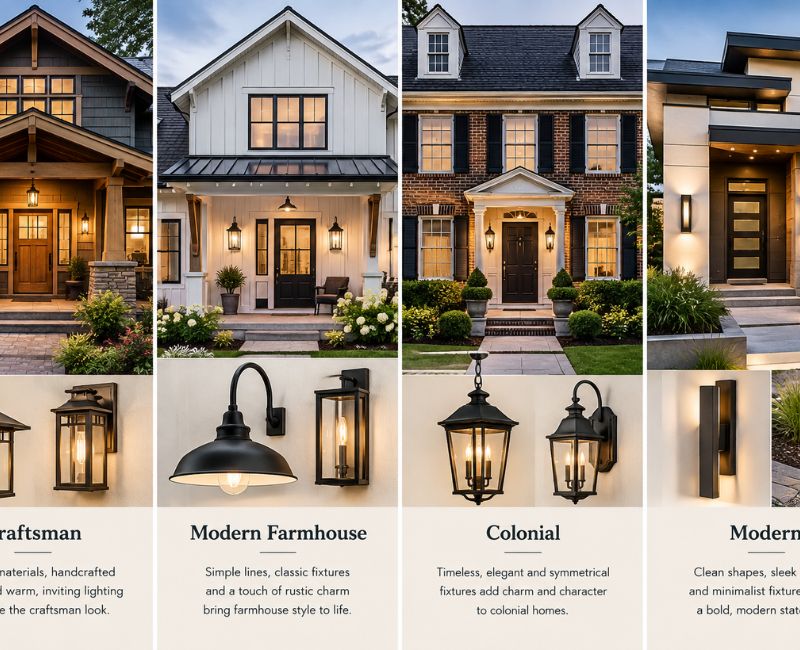
Every home has an underlying architectural language, whether it’s a craftsman bungalow, a modern farmhouse, a colonial, or a mid-century ranch, and outdoor light fixtures should speak that same language. Craftsman and bungalow homes typically pair well with mission-style or hammered metal fixtures; modern homes suit clean lines and matte black or brushed metal finishes; traditional and colonial exteriors often look best with classic lantern shapes in bronze or oil-rubbed finishes; and farmhouse styles tend to favor industrial or vintage-inspired fixtures with exposed bulbs.
Choosing fixtures that reflect your home’s built character is a foundational step in Matching Outdoor Lights successfully, and it prevents the disjointed look that comes from picking pieces based on price or trend alone.
Coordinating Lighting Across Different Outdoor Zones
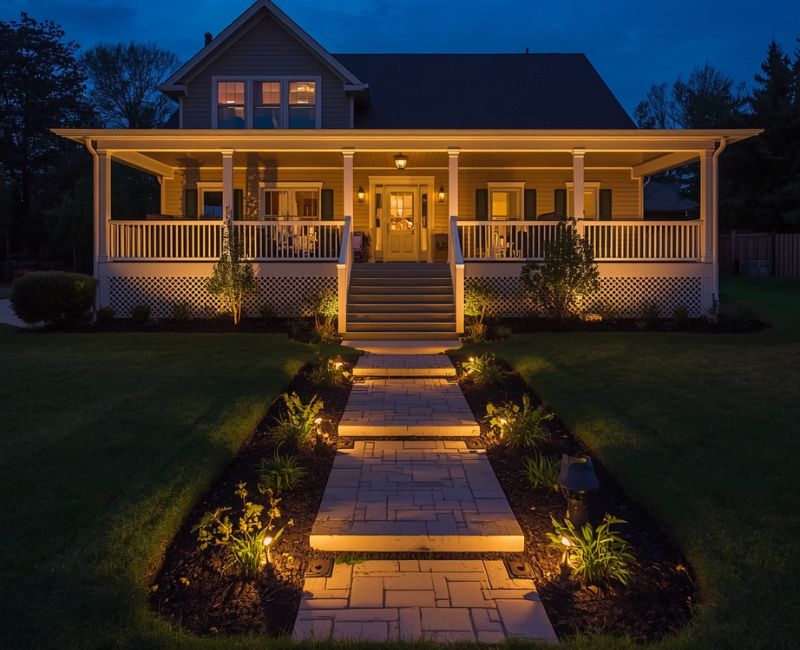
A home’s exterior typically includes several distinct areas: the front entry, walkway, driveway, patio, deck, and garden beds. Each zone serves a different function, but that doesn’t mean the lighting in each should feel disconnected from the rest.
Front Entry and Porch
This is usually the focal point of your home’s exterior after dark. Entry fixtures should be sized appropriately for your door and overhang, bright enough for guests to see clearly, and styled to match the home’s overall character.
Walkways, Driveways, and Patios
Path lights guide movement and prevent tripping hazards. They don’t need to match your entry fixture exactly, but sharing a finish or design cue, like matching metal tones, keeps the transition from street to door feeling intentional. Patios, decks, and gardens often call for softer, ambient lighting, such as string lights or low-voltage fixtures. The fixture types will differ from your entry lighting, but keeping color temperature and finish consistent ties the whole property together.
Balancing Style With Everyday Functionality
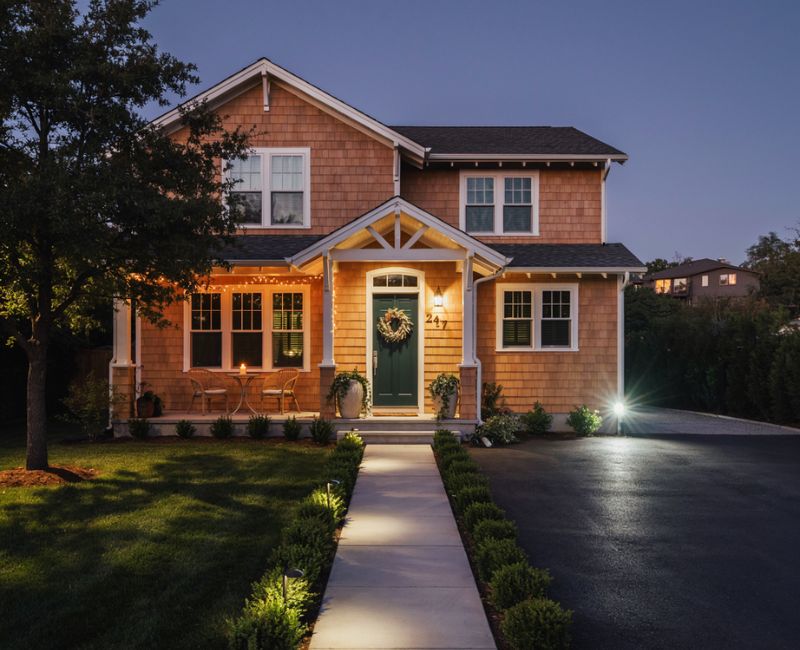
It’s tempting to choose fixtures purely for looks, but outdoor lighting has practical responsibilities too. A beautiful sconce that doesn’t cast enough light to see your keys defeats its purpose.
Consider brightness needs by area: entryways need enough light for key visibility, walkways need low, even illumination without harsh glare, driveways benefit from broader coverage for safety when parking, and patios or decks can lean on softer, mood-oriented lighting since they’re used for relaxing rather than navigating.
Successfully Matching Outdoor Lights means finding fixtures that satisfy both the visual and functional needs of each specific area, rather than prioritizing one at the expense of the other.
Safety and Visibility Considerations
Beyond appearance, exterior lighting plays a real safety role. Well-lit steps, walkways, and entry points reduce the risk of falls and help residents and guests move confidently at night, while illuminated driveways improve visibility for anyone arriving by car.
Motion-sensor fixtures near side entrances or less-traveled areas add an extra layer of security without requiring lights to stay on all night. Plan placement around the paths people actually walk, not just the areas that look nicest in photos.
Choosing Fixtures by Outdoor Area
Different parts of your property call for different fixtures, wattages, and mounting styles. The table below offers a starting point for what each zone typically requires.
| Outdoor Area | Recommended Lighting | Main Purpose |
| Front Entry | Wall-mounted sconces or lanterns | Welcome guests and support key visibility |
| Walkway | Low-voltage path lights | Guide movement and reduce tripping hazards |
| Driveway | Post lights or flush-mounted fixtures | Improve visibility for vehicles and pedestrians |
| Patio | String lights or overhead fixtures | Create ambiance for evening gatherings |
| Garden Beds | Spotlights or uplights | Highlight landscaping features and add depth |
| Deck | Recessed step or rail lights | Prevent falls and define the space at night |
This area-by-area planning makes Matching Outdoor Lights far more manageable, since you’re working from a clear picture of what each space needs rather than guessing at fixtures one at a time.
Color Temperature and Visual Consistency
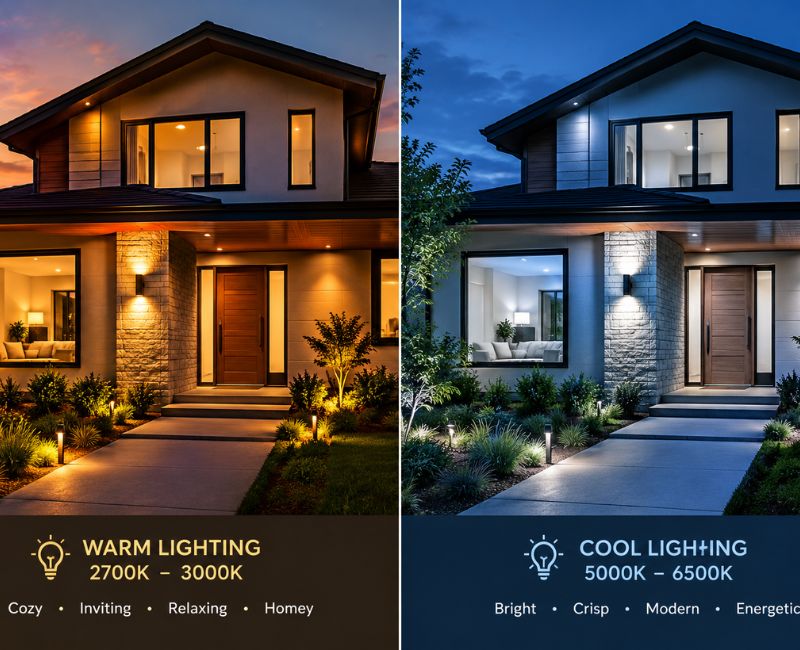
One of the most overlooked details in exterior lighting is color temperature, measured in Kelvin. Warm white light, around 2700K to 3000K, tends to suit most residential exteriors, while cooler, bluish tones can feel clinical against brick, wood siding, or landscaping. Sticking to a single color temperature range across your property, even when fixture styles vary by area, is one of the simplest ways to create cohesion, and it’s a detail many homeowners overlook.
Selecting the Right Fixture Sizes
Fixture size matters more than most people expect. An oversized lantern beside a modest front door can overwhelm the entryway, while an undersized fixture on a large two-story home can look out of place and provide insufficient light. Entry fixtures should be proportionate to the door and trim, while path and garden lights should stay low-profile so they don’t compete visually with landscaping.
Materials and Finishes That Tie Everything Together
Finish consistency, more than exact fixture matching, is often what makes exterior lighting feel coordinated. Common finishes include matte black, oil-rubbed bronze, brushed nickel, and aged copper. Picking one or two complementary finishes and using them across entry, path, and patio fixtures creates intention, even when the fixture shapes vary from area to area.
How to Create Harmony Without Everything Looking Identical
A common misconception is that Matching Outdoor Lights means every fixture must be the exact same model. In reality, overly uniform lighting can look flat and uninspired. The goal is harmony, not duplication.
You can vary fixture shapes and sizes across different zones as long as you maintain consistency in finish or metal tone, color temperature, and general style era, whether that’s modern, traditional, or transitional. This keeps the overall design feeling unified rather than like a random assortment of parts.
Coordinated Versus Mismatched Lighting: A Side-by-Side Look
Seeing the practical differences between a thoughtful plan and a haphazard one makes the value of coordination clearer.
| Feature | Coordinated Lighting | Random or Mismatched Lighting |
| Visual Appeal | Feels intentional and polished | Looks cluttered or accidental |
| Functionality | Matches brightness to each area’s needs | Often over-lit in some spots, dim in others |
| Curb Appeal | Enhances the home’s architectural style | Distracts from otherwise attractive features |
| Maintenance | Easier to source replacement parts and bulbs | Harder to match discontinued or unrelated fixtures |
| Resale Value Perception | Reads as a cared-for, move-in-ready home | Can suggest deferred maintenance or rushed updates |
Common Mistakes Homeowners Make With Outdoor Lighting
Even well-intentioned homeowners run into a few recurring issues:
- Buying fixtures one at a time without a broader plan, resulting in a patchwork look.
- Mixing warm and cool color temperatures across different areas.
- Choosing trendy fixtures that clash with the home’s architectural period.
- Overlighting patios and gardens until the space feels like a parking lot instead of a retreat.
- Ignoring scale, leading to fixtures that are too small or too large for their location.
Avoiding these missteps is largely about planning ahead rather than shopping reactively. Committing to Matching Outdoor Lights from the start, rather than treating each fixture as a separate purchase, prevents most of these problems before they happen.
Practical Tips for Getting Started
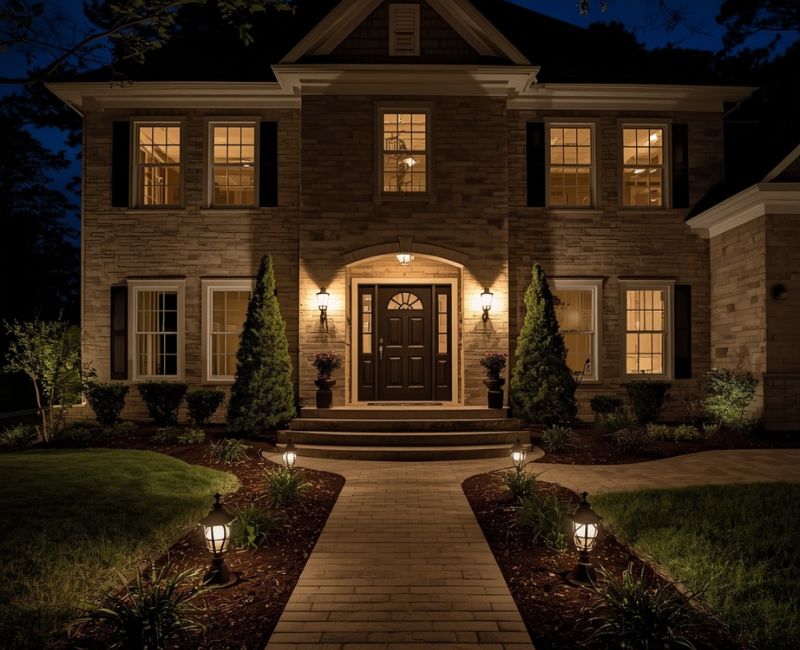
If you’re planning to update your exterior lighting, a few simple steps make Matching Outdoor Lights across the whole property far less overwhelming:
- Walk your property at dusk and note which areas feel too dark or unevenly lit.
- Choose one or two finishes to use consistently throughout the property.
- Settle on a color temperature range before buying any fixtures.
- Prioritize entry and walkway lighting first, since these affect both safety and first impressions.
- Add accent and garden lighting last, once the functional lighting is in place.
Frequently Asked Questions
Do All My Outdoor Lights Need to Match?
No. Fixtures don’t need to be identical. Keeping a consistent finish, color temperature, and general style across your property creates harmony even when fixture shapes vary by area.
Should Outdoor Lighting Match Indoor Lights?
Not necessarily. Indoor and outdoor fixtures serve different purposes and face different conditions, so exact matching isn’t required. Keeping a similar overall style or warmth, though, can make the transition between the two spaces feel more natural.
What Are the Main Benefits of Adding Outdoor Lighting?
Outdoor lighting improves safety by illuminating steps, walkways, and entry points, boosts curb appeal, extends the usability of patios and decks into the evening, and adds a layer of security by making your property feel occupied.
How Many Different Fixture Styles Can I Use on One Property?
There’s no strict limit, but sticking to two or three complementary styles, tied together by finish and color temperature, is generally the simplest path to Matching Outdoor Lights successfully without the property looking pieced together.
Is It Worth Hiring a Professional for Exterior Lighting Design?
For smaller updates like path lights or a single entry fixture, most homeowners can handle the planning themselves. For larger properties or complex layouts, a professional designer can help balance function, safety, and style more efficiently.
How Often Should Outdoor Light Fixtures Be Replaced or Updated?
There’s no fixed timeline, but fixtures showing rust, cracked housings, or styling that clashes with recent home updates are good candidates for replacement. Many homeowners reassess their exterior lighting every decade or so, or after a major renovation.
Final Thoughts
Thoughtful exterior lighting does more than illuminate your property after dark; it ties your home’s architecture, landscaping, and outdoor living spaces into a cohesive whole. From choosing fixtures that reflect your home’s style to keeping color temperature consistent and sizing fixtures appropriately, small decisions add up to a polished result. Matching Outdoor Lights across your entryway, walkway, patio, and garden doesn’t mean buying identical fixtures everywhere; it means creating a consistent visual language that guides the eye and supports everyday function.
Whether you’re starting from scratch or updating a few mismatched fixtures at a time, approaching your exterior lighting with a clear plan pays off in both appearance and practicality. A well-lit, coordinated home feels safer and more welcoming night after night, which makes the effort of planning your lighting layout well worth it.

Welcome to Cozy Escape Hub! I am Muhammad Hassaan, an AI Powered SEO and content writer with a 2 years of experience.
I help websites rank higher, grow traffic , and look amazing. My goal is to make SEO and web design simple and effective for everyone. Let’s achieve more together!