
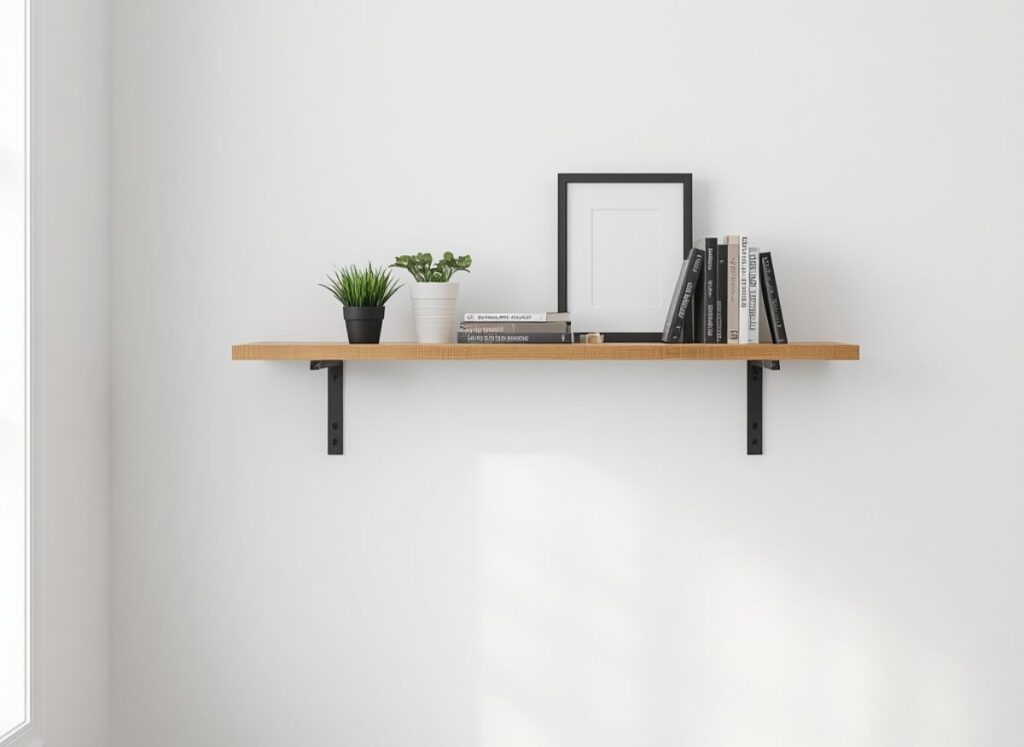
Finding a stud in exactly the right spot rarely goes according to plan. You measure, tap the wall, run a stud finder back and forth, and the stud sits two inches from where you wanted your shelf. If you have ever stared at a blank stretch of drywall wondering whether your shelving plans are dead in the water, they are not.
This guide covers what you need to hang wall mounted shelves on drywall when studs are not cooperating: which anchors hold weight, how to read your wall before drilling, and which mistakes cause most DIY shelf failures. By the end, you should feel confident choosing the right hardware and installing shelves that stay put for years.
Can You Install Shelves Without Hitting a Stud?
Yes, and it is more common than most people realize. Studs are typically spaced 16 or 24 inches apart, so a lot of usable wall space has no wood behind it. Manufacturers design anchors specifically for this reality, and modern hollow wall anchors hold surprisingly heavy loads when installed correctly.
That said, “possible” does not mean identical to mounting into a stud. Drywall is a soft, brittle material with almost no shear strength on its own, which is why the anchor you choose matters more for wall mounted shelves than it would with solid framing behind them.
Why Drywall Alone Cannot Support Every Load
A bare screw driven into drywall with nothing backing it up holds very little weight, often just a pound or two before it tears through the paper facing. Drywall is a finish surface, not a structural one, and real holding power comes from spreading the load across a wider area exactly what a good anchor does.
Think of it like snowshoes on soft snow: a boot alone sinks through, but a wider surface distributes weight so you stay on top. Anchors work the same way inside a wall cavity, gripping or expanding against the back of the drywall so force spreads out instead of concentrating on one point for Wall Mounted Shelves.
Choosing the Right Shelf and Mounting System
Decide what kind of shelf you are installing and what it needs to hold before you think about anchors. A small decorative ledge has very different requirements than a bookshelf.
- Expected load books, dishes, and plants are heavier than most people estimate once combined.
- Shelf depth deeper shelves create more leverage, increasing pull on anchors.
- Bracket style L-brackets, hidden floating-shelf brackets, and rail systems distribute weight differently.
- Wall location – shelves near doorways or high-traffic areas take more incidental stress.
Matching the system to the shelf’s actual use is the biggest factor in whether an installation lasts.
Understanding Your Wall Before You Drill
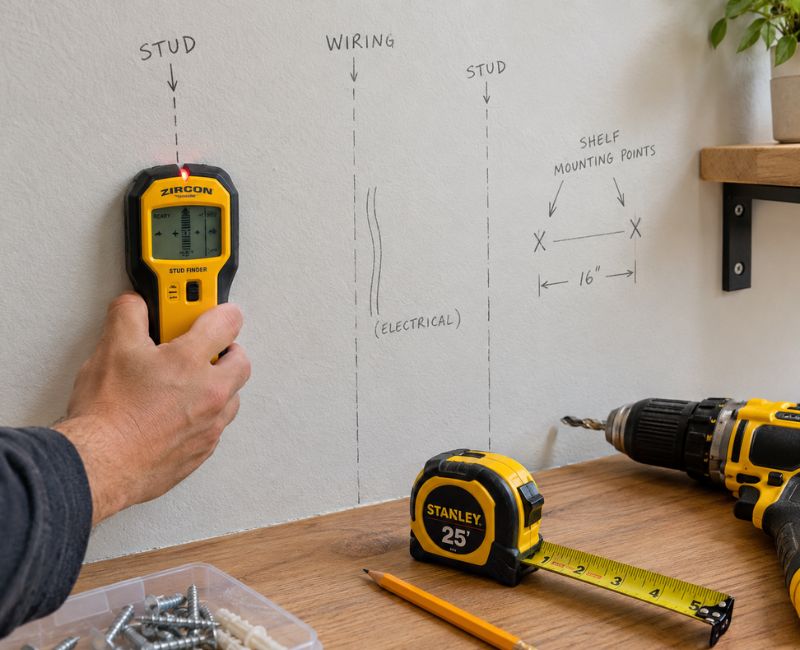
Standard interior walls use 1/2-inch or ⅝ inch drywall, with the thicker option often found on ceilings or fire-rated walls. Knowing your thickness matters because some anchors are designed for a specific range.
Use a stud finder that also detects wiring and pipes, and scan the area before marking anything to avoid drilling into a wire or water line. It also helps to locate nearby studs anyway, since they give a reliable reference for level and may anchor one end of a longer rail-style shelf.
Measuring and Marking Shelf Placement
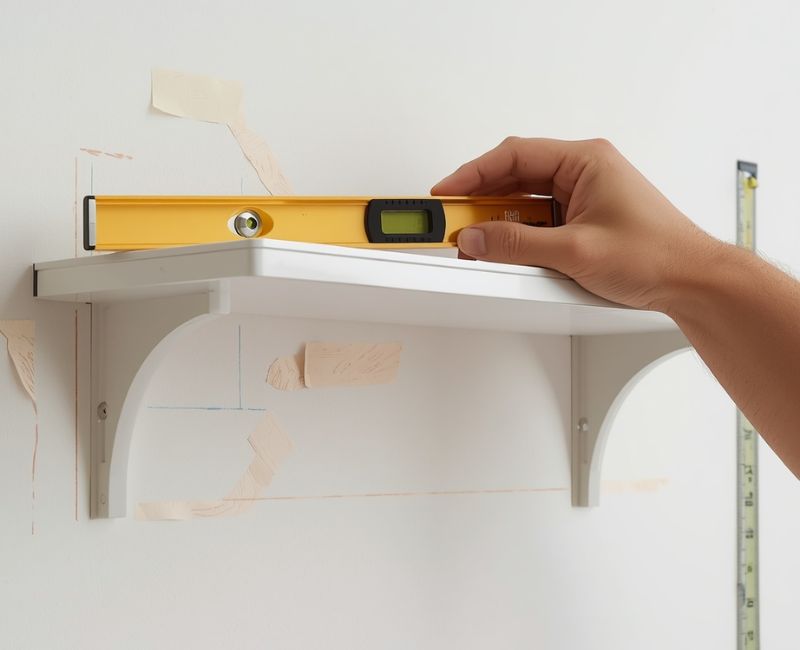
Accurate marking prevents the most common headache: crooked shelves. Use a level, not your eye, and mark anchor points with a pencil rather than guessing mid-drill.
- Mark the top edge with a level line at your chosen shelf height.
- Hold the bracket against the wall and mark each mounting hole through the hardware.
- Cross-check spacing against your stud-finder scan to avoid hidden wiring.
- Use painter’s tape over the marks so the drill bit doesn’t wander on smooth paint.
Rushing this step is why so many wall mounted shelves end up visibly tilted.
Selecting Appropriate Drywall Anchors
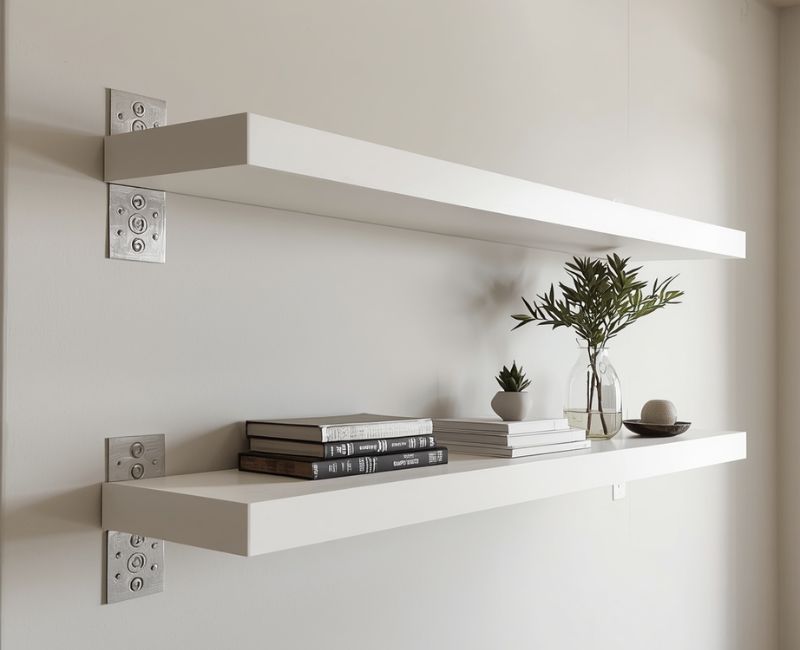
This is where most installations of wall mounted shelves succeed or fail. The right hollow wall anchor depends on the weight of your shelf and contents, plus your drywall’s thickness.
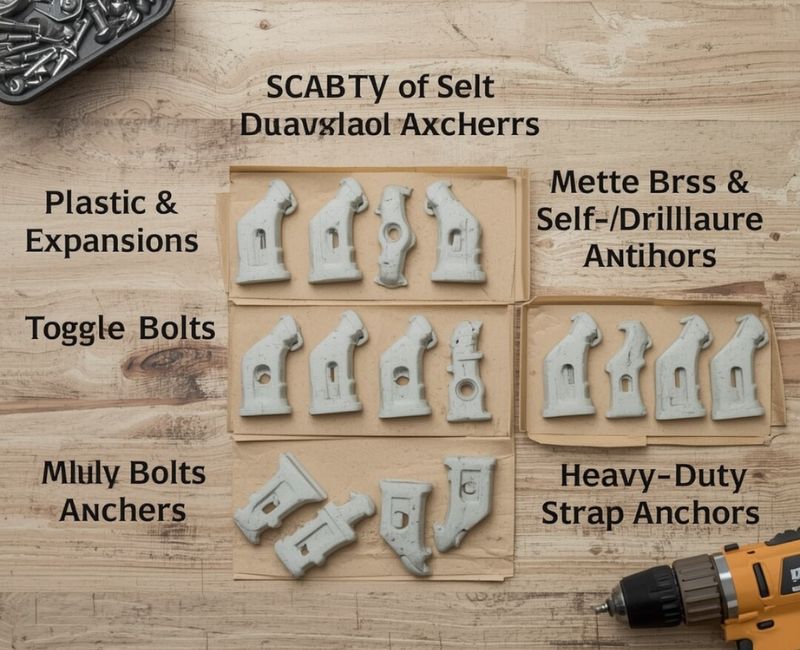
Plastic expansion anchors suit very light items, generally under 10 pounds, like a small ledge holding photos.
Self-drilling plastic anchors often thread in without a pilot hole and hold moderate loads, typically up to 20-25 pounds per anchor.
Toggle bolts use spring loaded wings that open behind the drywall, spreading weight across a wide area, a good fit for heavier brackets, holding 50 pounds or more per anchor.
Molly bolts grip the back of the drywall as they tighten, offering solid mid range holding power and easy removal later.
Heavy-duty strap anchors handle repeated stress and moderate to heavy loads, a strong choice for shelving used daily.
Mounting Option Comparison
The table below summarizes anchor choices for wall mounted shelves at a glance.
| Mounting Option | Best For | Typical Use | Load Consideration | Installation Notes |
| Plastic expansion anchor | Very light items | Small decorative ledges | Under 10 lbs | Pre-drill a pilot hole; limited holding power |
| Self-drilling plastic anchor | Light-to-moderate loads | Small brackets, hooks | Up to 20-25 lbs | No pilot hole needed; quick install |
| Toggle bolt | Heavier brackets | Bookshelves, kitchen shelves | 50+ lbs per anchor | Larger hole required; wings expand inside cavity |
| Molly bolt | Mid-range loads | Standard shelf brackets | 25-50 lbs | Grips drywall as it tightens; removable |
| Heavy-duty strap anchor | Frequent daily use | Shelving handled often | Moderate-to-heavy | Resists repeated stress over time |
Installing Brackets or Mounting Hardware
Drill a pilot hole sized to the anchor manufacturer’s specification too large and the anchor won’t grip, too small and you risk cracking the drywall. Insert the anchor flush with the wall, then attach the bracket, tightening screws evenly rather than fully seating one before starting the next. For rail or track systems, confirm the rail is level before marking additional holes, since a slight tilt gets magnified across its full length.
Installing Floating Shelves Where Anchors Matter Most
Floating shelves rely on a hidden metal bracket or rod that slides into a routed channel, hiding the hardware entirely. Because visible fasteners are limited, they depend heavily on anchor quality. For anything beyond light décor, toggle bolts or heavy duty strap anchors are the better choice, since the bracket has less surface area than a traditional L bracket. For shelves holding books or serving pieces, use two or three anchor points rather than the minimum.
How to Drill Without Damaging the Wall
- Use a slow drill speed to avoid chipping the paper surface.
- Apply light, steady pressure rather than forcing the bit through.
- Vacuum dust from the hole; leftover debris weakens the grip.
- Keep the drill perpendicular so the anchor sits flush rather than angled.
If a hole ends up oversized, a dab of spackle and a slightly larger anchor will usually solve it.
Weight Distribution and Load Considerations
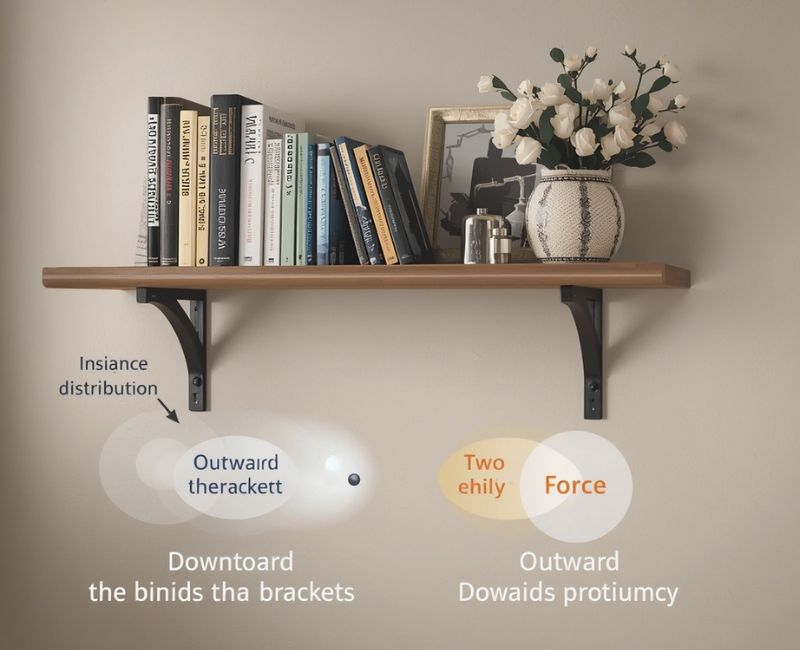
The weight listed on anchor packaging refers to one anchor pulling straight out, which isn’t quite how a shelf behaves. In real life a loaded shelf pulls downward and outward at once, so the practical safe load is usually lower than the printed maximum. A reasonable rule: use at least two anchors per bracket beyond the lightest décor, and treat your intended load as roughly half the anchors’ combined rated capacity as a safety margin.
Comparing Mounting Methods Side by Side
| Mounting Method | Works Without Studs? | Best Use | Installation Difficulty | Main Advantage |
| L-brackets with toggle bolts | Yes | General-purpose shelving | Moderate | Strong, visible support for heavier loads |
| Hidden floating shelf brackets | Yes, with heavy-duty anchors | Minimalist display shelving | Moderate-high | Clean look with no visible hardware |
| Direct-to-stud screws | No, requires a stud | Heavy or built-in shelving | Low | Maximum strength, no anchor needed |
| Rail or track systems | Yes, partial stud contact helpful | Adjustable, modular shelving | Moderate | Flexible height changes, fewer new holes |
| Adhesive strip mounts | Yes | Very light, temporary items | Low | No drilling, but limited weight capacity |
Common Installation Mistakes to Avoid
Using anchors rated below the load is the single most frequent mistake with wall-mounted shelves. People often underestimate how heavy “a few books” really are once lined up. Skipping the level during marking is another common culprit, along with drilling oversized holes that leave an anchor loose. It also pays to avoid mounting heavy shelves too close to a corner or doorframe, where drywall has less backing and cracks more easily.
Safety Precautions Worth Taking Seriously
Wear eye protection when drilling overhead, since dust and debris can fall unexpectedly. Double-check for wiring and plumbing with a multi-sensor detector, especially near outlets, kitchens, and bathrooms. If working on a ladder, keep it stable and avoid overreaching. Never exceed your hardware’s stated weight limits, and remember combined weight includes both the shelf and everything on it.
Testing Your Shelves After Installation
Before loading a new shelf with anything valuable, apply firm downward pressure by hand and check for movement at the wall connection. Let it sit under light load for a day or two, then add weight gradually rather than all at once. If you notice any give, reinforce or replace the anchor immediately rather than risk the shelf pulling free later.
When Studs or Extra Reinforcement Are Truly Necessary
Not every load belongs on drywall alone, and some wall mounted shelves genuinely need stud support. Heavy bookshelves, shelving meant to hold electronics, or anything carrying more than roughly 50-75 pounds total should tie into at least one stud, or use a mounting board spanning multiple studs. A hybrid approach often works best: anchor part of the shelf to a stud, and use quality hollow-wall anchors for the remaining points to keep it level.
Frequently Asked Questions
How to Hang Shelves on Drywall Without Studs?
Choose an anchor rated for your shelf’s weight, such as a toggle bolt or self-drilling anchor, drill a properly sized pilot hole, insert the anchor flush with the wall, then attach your bracket evenly across all mounting points.
Can You Mount Shelves Directly Into Drywall?
You can mount very light items directly with self-tapping screws in some cases, but for most wall mounted shelves, a dedicated anchor is strongly recommended since bare drywall has very little holding strength alone.
What Wall Anchors Work Best for Floating Shelves?
Toggle bolts and heavy-duty strap anchors tend to work best, since the hidden bracket design has less contact area and needs anchors that distribute weight across a wider section of the wall cavity.
How Much Weight Can Drywall Shelves Hold?
It depends on the anchor type and quantity used; light plastic anchors may hold only 10-20 pounds combined, while toggle bolts across two or three points can safely support 50 pounds or more.
Do Floating Shelves Need to Be Level Before Drilling?
Yes, always confirm level before marking final holes, since even a slight tilt becomes noticeable once the shelf is loaded and viewed across the room.
How Many Anchors Should One Shelf Bracket Use?
Most brackets need at least two anchor points for stability, and wider or deeper shelves often benefit from three, particularly when the shelf will regularly hold moderate to heavy items.
Conclusion
Installing wall mounted shelves without hitting a stud is entirely achievable once you understand how anchors distribute weight and which hardware matches your load. The process comes down to a few consistent habits: measure and level carefully, choose anchors rated for more than you think you need, and drill with patience rather than force.
Getting the hardware right matters more than finding a stud in the perfect spot. With the correct anchors, careful marking, and a bit of testing before you fully load your shelves, you can hang sturdy wall mounted shelves almost anywhere on drywall, studs or no studs.

Welcome to Cozy Escape Hub! I am Muhammad Hassaan, an AI Powered SEO and content writer with a 2 years of experience.
I help websites rank higher, grow traffic , and look amazing. My goal is to make SEO and web design simple and effective for everyone. Let’s achieve more together!