

A studio flat packs sleeping, cooking, working, and relaxing into a single room, so every design decision carries extra weight. The right studio flat design ideas can turn that limited footprint into a comfortable, stylish home. Smart furniture choices, layered lighting, a clear layout, and well-planned storage make the biggest difference.
Thoughtful small space interior design helps each zone serve a purpose without crowding the room, while space-saving furniture and smart storage solutions keep daily clutter under control. Whether the goal is a minimalist studio apartment or a warmer modern studio apartment design, the ideas below show practical ways to make a small studio flat feel open, organized, and personal. For more inspiration beyond studio layouts, discover practical tips on how to decorate a small apartment while making the most of limited space.
Make the Most of Every Inch in a Small Studio Flat

Good small space interior design starts with how people move through the room, not with what to buy. Planning the layout first prevents expensive furniture mistakes later.
1. Map the Layout Before Buying Anything
Sketch the floor plan on paper or with painter’s tape on the floor, marking the door swing, windows, radiators, and outlets. Taping out the footprint of a sofa or bed shows immediately whether a walkway gets blocked. Because every studio apartment layout differs, no universal clearance number applies; the goal is simply a clear path from the entry to the window, the kitchen, and the bed. Furniture bought after this exercise tends to fit the room rather than fight it.
2. Float Furniture Away From the Walls
Pushing everything against the walls feels logical but often makes a studio read as one long corridor. Pulling a sofa a short distance off the wall, with its back facing the sleeping area, defines the living area and leaves room behind it for a slim console or storage. This approach works best in rooms with a wide footprint. In very narrow studios, wall-hugging layouts may still make more sense to protect the walking path.
Choose Multifunctional Furniture for Everyday Living

In a compact home, every large piece should earn its place by doing at least two jobs. Multifunctional furniture also keeps the open-plan living space from filling up with single-purpose items.
3. Pick a Double-Duty Sofa
A double-duty sofa, such as a sleeper sofa or a daybed with a trundle, turns the seating area into a guest bed without adding another piece. Storage-base versions hide linens or off-season clothing below the seat. The trade-off is comfort and weight: sleeper mechanisms vary widely in quality, so testing one in person or reading the manufacturer’s specifications is worthwhile. For daily sleeping, a dedicated bed generally remains more comfortable.
4. Swap in an Expanding Coffee Table and Nesting Pieces
An expanding coffee table lifts and extends to become a dining or laptop surface, which suits studios without room for a separate table. Nesting tables offer a similar flexibility, tucking together when the floor needs to stay open and spreading out for guests. Lift-top models hide remotes and chargers inside. Choose a rounded or soft-cornered shape where the table sits near a walkway, since compact living furniture tends to be bumped more often.
Create Separate Living and Sleeping Zones

People search for ways to divide a studio because one undivided room can make it hard to relax or work. Zones signal what each area is for, even without walls.
5. Anchor Each Zone With an Area Rug
A rug under the sofa and coffee table marks the living area, while a smaller rug beside the bed softens the sleeping area. Using two different rugs with a shared color or pattern keeps the room cohesive. Rugs are a strong renter-friendly option because they require no installation. Keep the edges flat and avoid oversized rugs that crowd the walkway or visually shrink the floor.
6. Use Furniture Placement as an Invisible Boundary
A bookcase, console table, or the back of a sofa can separate zones without a full divider. An open-backed shelving unit allows light to pass through, which keeps the open and airy interior feeling intact. Display only a few items on it so it reads as a boundary and not as clutter. This idea works well when sleeping privacy is not a priority and the goal is mainly visual order.
Use a Murphy Bed or Loft Bed to Save Space

The bed is usually the biggest piece in a studio, so changing how it behaves frees the most floor space. The right option depends on ceiling height, wall construction, and budget.
7. Install a Murphy Bed for a Flexible Floor Plan
A Murphy bed folds into the wall or a cabinet, turning the sleeping area into a living or workout space during the day. Many models include side shelving or a built-in desk. Wall-mounted units generally need proper anchoring, so installation guidance from the manufacturer or a qualified professional matters, and renters should check lease terms before drilling. Cost and installation effort are higher than a standard bed, which makes this a long-term investment. If you are considering this space-saving option, explore these modern Murphy bed ideas for stylish designs that combine comfortable sleeping arrangements with practical living space.
8. Raise the Bed With a Loft Platform
A loft bed lifts the mattress overhead and frees the space below for a desk, sofa, or closet. It suits studios with higher ceilings, though a low ceiling can make the sleeping area feel cramped and hot. Climbing a ladder every night is not ideal for everyone, so comfort, safety, and mobility should guide the decision. Freestanding frames avoid wall modifications and work better for renters.
| Option | Best For | Main Limitation |
| Murphy bed | Fully clearing the floor by day | Higher cost, wall anchoring needed |
| Loft bed | Studios with high ceilings | Ladder access, less headroom |
| Sleeper sofa | Occasional guests | Comfort for nightly use varies |
Add a Stylish Room Divider for Privacy
When visual separation matters, a divider offers bedroom privacy without permanent construction.
9. Choose a Room Divider That Matches the Studio’s Style
A folding screen, curtain partition, or open shelving unit can all separate the sleeping area from the rest of the room. Folding screens move easily and suit renters, while a ceiling-mounted curtain track gives a softer, floor-to-ceiling effect. Sliding doors or panels suit owners who want a more permanent solution. Lighter materials such as slatted wood, frosted panels, or sheer fabric preserve natural light, whereas solid dividers feel more private but can darken the space. Any studio apartment room divider should still leave the walkway open.
Maximize Vertical Space With Smart Storage Solutions
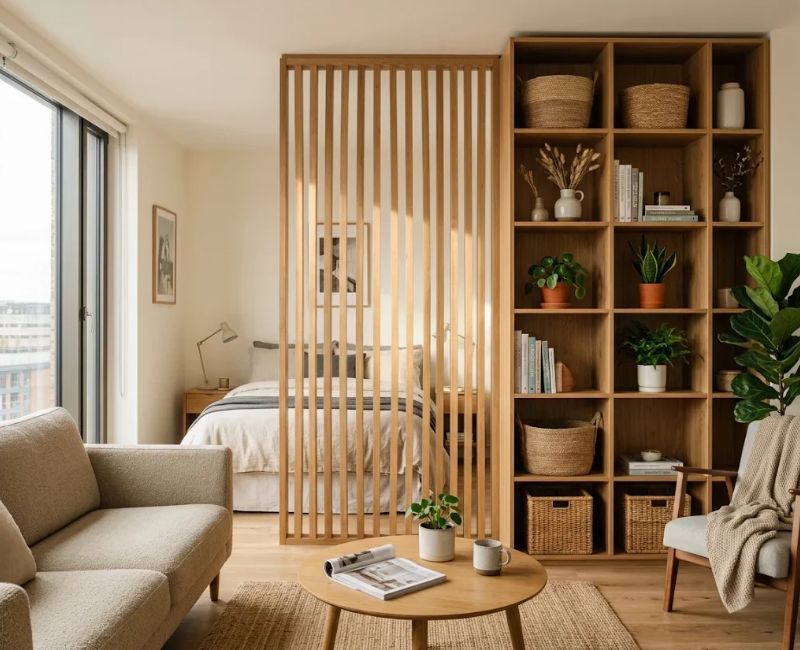
When floor space is limited, walls and ceilings become the most valuable storage real estate. The aim is vertical storage that looks organized rather than overwhelming.
10. Run Shelving Up to the Ceiling
Tall shelving makes use of height that most studios leave empty. Placing items used rarely on the upper shelves and everyday items at reach keeps the setup practical. Matching baskets or boxes unify the look and hide small items, which supports small-space organization. Tall units should be anchored to the wall for safety, so renters may prefer shorter freestanding options or mounting methods approved by the landlord.
11. Tuck Storage Into Hidden Places
Beds with drawers, ottomans with lids, and slim carts that roll into gaps all provide integrated storage without taking visible space. Over-the-door organizers and hooks in the entry help control shoes and bags. These studio apartment storage ideas share one rule: closed storage looks calmer than open shelves for bulky or mismatched items, so reserve open shelving for pieces worth displaying. For more creative ways to use overlooked areas, explore these clever understairs storage ideas to transform unused spaces into practical storage areas.
Choose Low-Profile Furniture to Create an Open Feel
Visual weight affects how big a room feels, and low furniture lets the eye travel across walls and windows.
12. Pick Low-Profile Pieces With Slim Legs
Low-profile furniture, including sofas with a modest back height and platform beds, keeps sightlines clear. Midcentury modern furniture is a popular fit because its tapered legs show the floor beneath, which reads as more open than bulky, skirted designs. The drawback is reduced under-furniture storage, so pair these pieces with wall storage or a bed that includes drawers. Keep the upholstery simple to maintain a minimalist studio apartment look.
Let Natural Light Make Your Studio Flat Feel Bigger
Natural light is one of the strongest tools in a small flat, and it costs little to protect.
13. Dress Windows With Sheer Curtains
Sheer curtains diffuse sunlight while keeping some daytime privacy, and mounting the rod close to the ceiling makes windows appear taller. Pairing sheers with a thicker curtain layer allows full darkness in the sleeping area when needed. Avoid heavy drapes in the main living space, since they absorb light and add visual bulk. Washable fabrics keep the look fresh in a room where windows are a focal point.
14. Keep Light Paths Clear
Furniture placed in front of windows blocks daylight from reaching the rest of the room. Keeping tall pieces away from the window wall and using glass or open-backed items near it lets light travel deeper. If the flat has only one window, arrange the main living area where the light lands, and place the bed in the dimmer part of the room, where lower light is less noticeable.
Use Mirrors to Create the Illusion of More Space
Mirrors multiply light and add depth when they are placed with intention.
15. Position Mirrors Opposite or Beside Windows
A large mirror placed across from a window bounces daylight around the room and can make a small studio feel more open. A leaning floor mirror is an easy renter-friendly choice, while a mirror on a wardrobe door serves two purposes. Check what the mirror reflects before hanging it, because reflecting clutter or a bare wall adds little. A mirror cannot create actual square footage, but it can noticeably improve how the room feels.
Choose a Light and Cohesive Color Scheme

Color controls mood and perceived size. A restrained palette helps a studio read as one calm, connected space.
16. Build the Room Around a Light Color Palette
A light color palette of soft whites, warm neutrals, or pale gray reflects more light and keeps the room open and airy. Painting walls, trim, and even the ceiling in related tones reduces visual breaks. Light colors do not suit every home: a north-facing studio with little sun may feel cold in crisp white, so warmer undertones often work better. Testing paint samples at different times of day is a worthwhile step.
17. Add Contrast With Decorative Accents
A neutral base can look flat without contrast. Decorative accents such as cushions, a throw, artwork, or a single bold chair introduce personality in a controlled way. Repeating two or three accent colors across both the living and sleeping areas ties the zones together. Peel-and-stick wallpaper on one wall, such as behind the bed, adds pattern without permanent commitment, though results depend on the wall surface and the product used.
Create a Functional Kitchen With Space-Saving Ideas
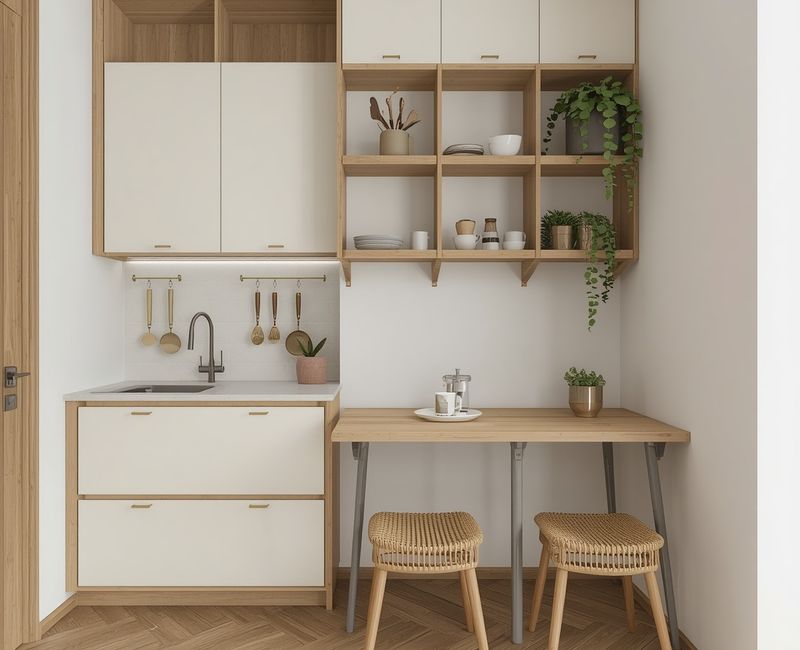
In many studios, the kitchen sits in the open, so it has to look tidy and work hard.
18. Optimize a Compact Kitchenette With Vertical Storage
A compact kitchenette benefits from wall rails for utensils, a magnetic knife strip, and shelving above the counter. Using the inside of cabinet doors for organizers and choosing stackable containers keeps small-space organization efficient. Keep the counters as clear as possible, since an uncluttered work surface makes a small kitchen feel larger. Rental-friendly options include tension rods, adhesive hooks rated for the weight, and freestanding racks.
19. Add a Dining Nook That Folds Away
A drop-leaf table, wall-mounted fold-down table, or a bar-height counter can create a dining nook without a permanent table. A drop-leaf model sits flat against the wall when not in use and opens for meals. Slim stools that tuck under the counter keep the floor clear. This setup suits one or two people; hosting larger groups may require borrowing the expanding coffee table or a second surface.
Design a Cozy and Stylish Bedroom Nook
A studio apartment bedroom does not need a separate room to feel restful. Layers and boundaries create the sense of a retreat.
20. Frame the Bed With a Headboard Wall
A statement headboard, painted panel, or peel-and-stick wallpaper behind the bed defines the sleeping area and gives the nook an anchor. Wall-mounted reading lights free up nightstand space, and a pair of narrow shelves can replace bedside tables. Keeping the bed against a wall also saves floor space, although it makes one side harder to access, which matters for couples.
21. Use Built-In Furniture or an Alcove to Define the Nook
If the studio has an alcove, fitting the bed inside it with built-in storage on either side creates a snug, hotel-like sleeping space. Built-in furniture is a custom investment that suits owners more than renters, and local building rules may apply to structural changes. Renters can imitate the effect with a canopy-style curtain track or freestanding wardrobes that frame the bed, avoiding any permanent changes.
Add a Compact Workstation With a Folding Desk
Remote work has made a desk a standard need, even in small flats.
22. Install a Wall-Mounted Folding Desk
A fold-down desk offers a work surface that disappears after hours, which helps separate work from rest in a multifunctional living area. Console tables, secretary-style desks with closing doors, or a desk built into a Murphy bed unit are alternatives. Pay attention to chair choice, since a comfortable and supportive chair matters for long workdays. A folding desk is ideal for light laptop work, but anyone using multiple monitors may need a sturdier, fixed surface.
Use Wall-Mounted Lighting and Smart Decor
Lighting and wall decor can shape zones and personality without using any floor space.
23. Layer Wall-Mounted and Plug-In Lighting
Relying on one ceiling fixture flattens a studio. Layering plug-in wall sconces, a slim floor lamp, and under-shelf lighting gives each zone its own mood and eliminates the need for bulky table lamps. Warm-toned bulbs generally suit sleeping and relaxing areas, while brighter, cooler light helps in the kitchen and at the desk. Plug-in sconces with cord covers are a good renter-friendly option because they avoid electrical work.
24. Build a Gallery Wall That Stays Organized
A gallery wall turns blank space into a focal point without taking up the floor. Arranging frames in a consistent color or matte style keeps the look cohesive, and laying the layout on the floor first helps with spacing. Adhesive hanging strips can protect rental walls, as long as the weight limits on the packaging are followed. Keep the arrangement tight and centered over the sofa or bed so it reads as one unit.
Bring Your Studio Flat to Life With Plants and Personal Touches

After the layout and storage are settled, small details make a studio feel like a home.
25. Add Plants, Textiles, and Meaningful Objects
Plants add texture and softness; hanging planters and shelf-top greenery keep them off the floor. Choosing species that suit the available light matters, because plants in dim corners may struggle, and some are unsafe for pets, so checking before buying is wise. Textured throws, linen cushions, and a few meaningful objects add warmth without clutter. In a minimalist studio apartment, editing is key: displaying fewer, better-chosen items keeps the space calm and makes each one count.
Frequently Asked Questions
How can a small studio flat look bigger?
Use a light color palette, hang mirrors opposite windows, and choose low-profile furniture with visible legs. Keep window areas clear so natural light reaches deeper into the room, and limit decorative items to prevent visual clutter.
How should furniture be arranged in a studio apartment?
Group furniture by function: a living area, a sleeping area, and a kitchen or dining nook. Keep a clear walkway between zones and use rugs, shelving, or a sofa back to mark boundaries. Test the layout with painter’s tape before buying large items.
What furniture is best for a small studio flat?
Multifunctional pieces tend to work best, including a sleeper sofa, storage bed, Murphy bed, expanding coffee table, and nesting tables. Choose items scaled to the room rather than the largest option that technically fits.
How can a bedroom be separated in a studio apartment?
A folding screen, curtain partition, open bookcase, or sliding panels can separate the sleeping area. Lighter dividers keep the room bright, while solid options provide more privacy. Renters should favor freestanding or tension-mounted solutions.
Which colors work best in a small studio flat?
Soft whites, warm neutrals, and pale tones reflect light and unify the room. Dark colors can work as accents or on one feature wall, though the best choice depends on how much natural light the flat receives.
How can storage be increased in a studio apartment?
Go vertical with ceiling-height shelves and wall-mounted storage, and add hidden storage in beds, ottomans, and benches. Use matching baskets to keep open shelves tidy, and regularly edit belongings so storage does not become clutter.
Conclusion
The strongest studio flat design ideas share a few principles: plan the layout first, choose furniture that works twice, protect natural light, and keep storage mostly vertical or hidden. Zoning the room with rugs, dividers, and lighting creates order without walls, while a cohesive palette and a few personal touches provide character. No single idea suits every home, so mix the options that fit the space, budget, and lease. A studio designed around how its occupant actually lives will always feel larger and more comfortable than one decorated for looks alone.

Welcome to Cozy Escape Hub! I am Muhammad Hassaan, an AI Powered SEO and content writer with a 2 years of experience.
I help websites rank higher, grow traffic , and look amazing. My goal is to make SEO and web design simple and effective for everyone. Let’s achieve more together!