

Looking for tan bedroom ideas that feel warm, modern, and easy to recreate? Tan is a versatile neutral that works in minimalist, traditional, and organic-inspired rooms alike. In this article, you’ll find 21 elegant ways to style a tan bedroom, from layered textures and natural wood to sage green and terracotta accents. You’ll also learn which colors pair well with tan walls, how to choose the right paint shade, and how to decorate a small bedroom on a budget. Whether you’re repainting or simply refreshing your bedding, these ideas will help you create a cozy, timeless retreat.
Tan walls can look calm and inviting, but they can also end up flat, dull, or oddly yellow without the right plan. Many people struggle to pick complementary colors, add enough texture, or balance light and dark finishes. These tan bedroom ideas solve that problem with practical, easy-to-follow guidance. Inside, you’ll discover 21 stylish approaches, advice on pairing colors, tips for choosing and testing paint, and budget-friendly fixes for small rooms. By the end, you’ll know how to turn a plain tan bedroom into a warm, layered, and timeless space you’ll love coming home to.
21 Tan Bedroom Ideas for a Warm, Modern, and Timeless Look
1. Pair Tan Bedroom Walls With Crisp White Bedding

White bedding against tan walls creates a clean, hotel-like contrast that makes the bed the focal point. Choose a white linen or cotton duvet cover and add one or two pillows in a deeper tan to avoid a stark look. Bright white can feel cool beside very warm walls, so consider soft white if your paint has yellow undertones. Fresh bedding is also an easy update for renters.
2. Layer Different Shades of Tan for a Cozy Bedroom
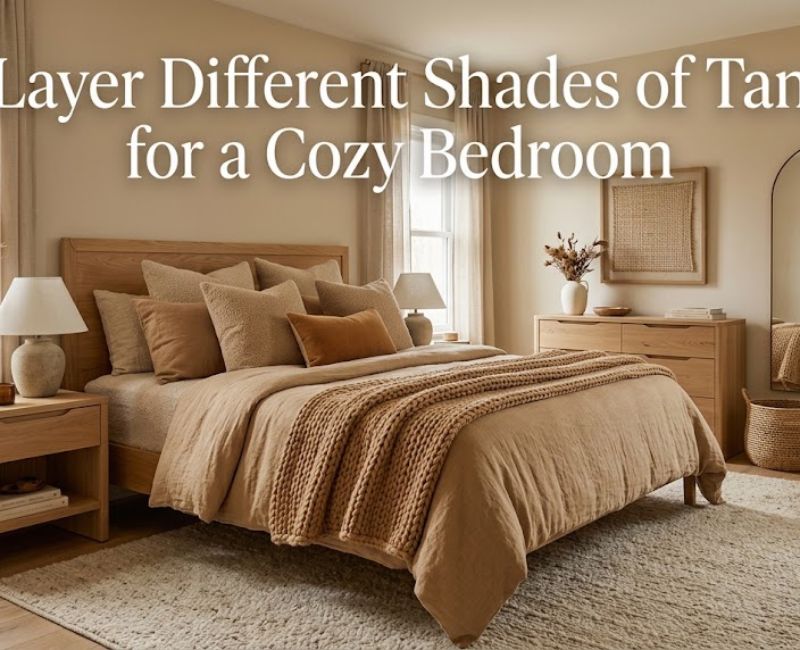
A monochrome scheme works when each shade sits at a different depth. Try light tan walls, a medium tan throw blanket, and deeper camel pillows. Varying the depth gives the eye somewhere to travel, which keeps the room from feeling uniform. Be careful to vary fabrics as well as colors, since a single flat texture makes layered shades blur together. A bouclé pillow beside a smooth cotton sham is a simple example.
3. Create a Tan and Cream Bedroom With Soft Neutral Textures
Cream is slightly warmer than white, so it blends gently with tan for a soft, enveloping mood. Combine cream sheets, a knit throw, and tan curtains with a subtle weave. This palette suits readers who want a quiet, low-contrast room. The trade-off is that it can feel sleepy without a darker anchor, so add one deeper element, such as a walnut nightstand or a brown ceramic lamp base.
4. Add a Tan Upholstered Headboard for a Luxury Bedroom
An upholstered headboard introduces softness and height behind the bed, which is where the eye naturally lands. Tufted, channeled, or plain panel styles all work in tan fabric. Performance fabrics and linen blends resist wear better than delicate velvets. If a new headboard is out of reach, a wall-mounted fabric panel or a slipcover can create a similar effect. Match the headboard’s undertone to your bedding so the two look intentional.
5. Combine Tan Bedroom Furniture With Natural Wood Finishes
Tan upholstered pieces, such as a bench or an accent chair, look at home beside oak, ash, or walnut. Aim to repeat wood tones in two or three places, such as a wooden bed frame, a dresser, and a picture frame, so the finish feels deliberate. Mixing too many wood shades can look chaotic, so choose one dominant tone and one secondary tone. Matching nightstands help the arrangement feel settled.
6. Design a Modern Tan and Beige Bedroom With Clean Lines
Tan and beige are close cousins, so success depends on shape and restraint. Choose furniture with straight edges and slim legs, and keep surfaces mostly clear. A low platform bed in a beige fabric against tan walls feels contemporary without being cold. Introduce interest through a single textured element, such as a ribbed headboard. If the two neutrals clash, check whether one has pink or green undertones.
7. Style a Tan and Sage Green Bedroom With Earthy Accents

Sage green adds a gentle, plant-inspired contrast that suits an earthy color palette. Bring it in through bedding, a velvet pillow, or a framed botanical print rather than painting a second wall. Real plants, such as a snake plant or pothos, reinforce the theme and add organic shapes. Choose a gray-leaning sage if your tan is warm, because a very yellow green can make walls look muddy.
8. Use Black Accents to Create a Modern Tan Bedroom
Thin black accents give tan a graphic, grounded edge. Think matte black lamp bases, a slim metal frame on a mirror, or black curtain rods. Use them sparingly, in about three small touches, so the room stays soft rather than heavy. This approach works especially well in rooms with ample daylight. In a very small, dim bedroom, dark brown or charcoal may feel less severe.
9. Decorate With Tan Bedding and Layered Linen Textures
Linen wrinkles naturally and absorbs dye in a slightly uneven way, which gives tan bedding a lived-in richness. Build the bed in layers: a fitted sheet, a linen duvet cover, a folded quilt at the foot, and a mix of decorative throw pillows in different weaves. Linen can feel rough at first, but it softens with washing. If maintenance is a concern, a linen-cotton blend offers a similar look.
10. Create a Tan and Brown Bedroom With Rich Wood Tones

Chocolate brown deepens tan and brings a cabin-like warmth. Try a dark wood dresser, brown leather bench, or espresso picture frames against tan walls. Keep the brown elements balanced across the room rather than stacked on one side. This pairing can lean heavy, so introduce lighter bedding and a pale rug to keep the space open. It also suits readers who like a slightly rustic bedroom design.
11. Add a Tan Accent Wall for a Sophisticated Look
If your other walls are white or cream, painting only the wall behind the bed tan adds depth without committing the whole room. Choose a wall without many windows so the color reads evenly. A slightly deeper tan makes the bed area feel anchored. Renters can mimic the effect with removable peel-and-stick paint or a large fabric panel. Avoid accent walls in rooms already crowded with pattern.
12. Introduce Terracotta Accents for a Warm Neutral Bedroom
Terracotta brings a sunbaked warmth that makes tan feel richer. Use it in small doses: a ceramic vase, a rust-colored throw, or a framed print with clay tones. These accents pair particularly well with natural fibers and wood. If your room faces north and already looks cool, terracotta can balance it. In a room with strong afternoon sun, keep the dose small to avoid an overly orange look.
13. Brighten a Small Bedroom With Light Tan Colors
Light tan reflects more daylight than deeper shades, which helps a compact room feel open. Continue the color onto trim or ceiling in a lighter variation to blur edges. Choose a slim bed frame and wall-mounted lighting to save floor space. Light colors help, but they are not magic: a room with very little natural light may still feel dim without good lamps. Test the paint in the corners where shadows gather.
14. Combine Tan and Charcoal Gray for a Contemporary Bedroom
Charcoal gray offers crisp contrast without the starkness of black. Try a charcoal upholstered bed or bedding against medium tan walls, then soften with cream pillows. Make sure the gray’s undertone suits the tan, since a blue-leaning gray can look cold beside a yellow-leaning tan. This pairing suits larger rooms best, because the dark mass can shrink a small space.
15. Use Natural Rugs and Woven Decor for an Organic Modern Style

Organic modern style favors handmade textures and simple forms. A jute or wool natural fiber area rug, rattan pendant, and woven storage baskets bring warmth without clutter. Place the rug so at least the front two-thirds of the bed sits on it. Jute can be coarse underfoot, so add a softer layered rug or place a plush runner beside the bed where bare feet land.
16. Create a Minimalist Tan Bedroom With Simple Furniture
A minimalist approach relies on fewer, better-chosen pieces. Keep a bed, two nightstands, and perhaps one dresser, and leave generous empty wall space. Let the tan walls act as the main decoration, adding a single piece of oversized art. This style depends on storage, so use under-bed drawers or a closed wardrobe to hide clutter. If it feels sparse, add one textured throw rather than more objects.
17. Choose Tan Wallpaper for Subtle Bedroom Texture
Grasscloth, linen-effect, or soft geometric wallpaper adds dimension that paint cannot. Look for a pattern with low contrast so it reads as texture rather than decoration. Apply it behind the headboard for a dramatic yet restrained effect. Natural-material wallpapers can be more delicate and may require professional installation. Renters can consider removable wallpaper, though adhesion varies, so test a small area first.
18. Style a Tan Bedroom With White Furniture and Warm Accents
White dressers and nightstands lighten a tan room and keep it from feeling heavy. Add warmth through brass hardware, a woven basket, or a wooden mirror frame so the white does not look clinical. This is a practical option if you already own white furniture, since the tan walls make it look intentional. Choose a soft white rather than a stark one to blend with the wall color.
19. Add Soft Lighting for a Cozy, Hotel-Inspired Bedroom
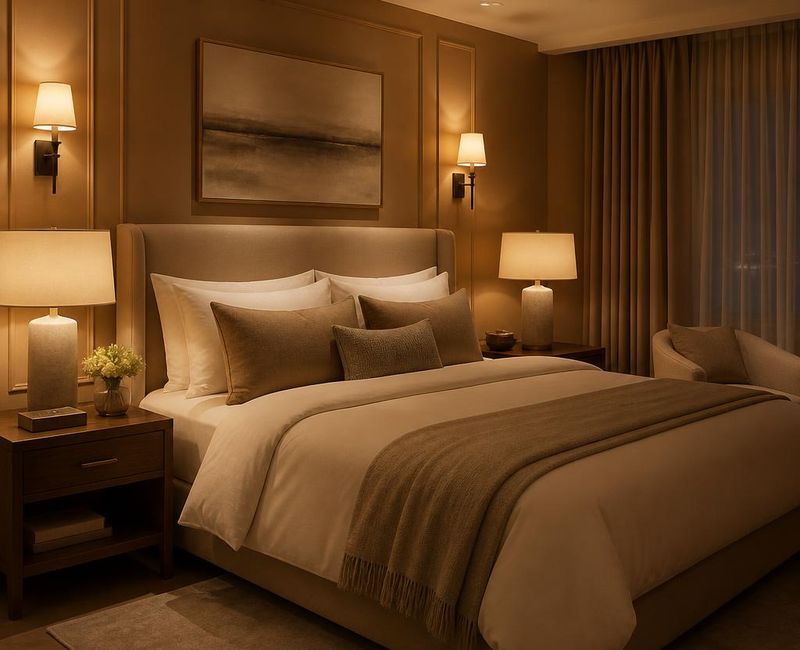
Hotels often rely on several low light sources rather than a single overhead fixture. Place bedside lamps with warm bulbs, add a small lamp on the dresser, and consider wall sconces over the bed. Dimmers let you shift from reading to winding down. Choose bulbs with a warm color temperature so tan walls glow rather than look gray, and check that any lamps match your outlet needs.
20. Coordinate Tan Curtains, Bedding, and Decorative Accessories
Cohesion comes from repeating a few colors across fabrics and accessories. Floor-length curtains in a slightly lighter or darker tan than the walls look polished, especially when hung close to the ceiling. Echo one bedding color in a pillow or a vase so the room feels planned. Avoid matching everything exactly, since a perfect set can feel showroom-like. Aim for coordination, not duplication.
21. Transform Your Tan Bedroom With Budget-Friendly Decor
You do not need a full renovation to refresh a tan bedroom. Start with inexpensive layers: new pillow covers, a throw blanket, and a mirror from a thrift shop. Rearranging furniture and decluttering surfaces can also change the mood at no cost. Prioritize items you touch daily, such as bedding. Splurge only where it matters to you, and add pieces gradually as budget allows.
How to Decorate a Tan Bedroom for a Timeless Look
Timeless design avoids chasing short-lived trends and focuses on comfort, proportion, and materials that age well. The following principles help your room look balanced for years. For more general inspiration, you might browse interior design ideas from The Home Trotters to discover creative decorating styles, practical space-saving solutions, and stylish ways to transform your home into a comfortable, beautiful, and functional living space.
Choose a Balanced Neutral Color Palette
Start with one dominant tan, one lighter neutral such as cream or ivory, and one deeper accent such as chocolate brown or charcoal. This balanced neutral palette keeps the room cohesive and gives you flexibility to swap accessories later. A helpful rule is to use roughly 60 percent for the main color, 30 percent for the secondary color, and 10 percent for accents, though it is a guideline rather than a requirement.
Mix Natural Materials and Textures
Natural textures prevent neutral rooms from looking flat. Combine wood, linen, wool, rattan, and ceramic in varied finishes. Aim to include at least one smooth surface, one rough surface, and one soft surface within view of the bed. If you add too many materials, the room can feel cluttered, so repeat each one at least twice to create rhythm.
Use Layered Lighting to Create a Relaxing Atmosphere
Layer three types of light: ambient (overhead or ceiling), task (reading lamps), and accent (a small lamp or sconce). Soft ambient lighting makes the space feel like a cozy sleeping environment. Position lamps at eye level when seated in bed to reduce glare. If you plan to change fixtures or wiring, consult a licensed electrician and follow local codes.
What Colors Go With Tan Bedroom Walls?
Tan is flexible, but the best partners depend on your room’s light and mood. For a soft, balanced bedroom color palette, explore Sherwin-Williams Drift of Mist, a subtle gray-beige shade that can complement warm tan walls beautifully.
Pair Tan Walls With White, Cream, and Ivory
White, cream, and ivory brighten tan and highlight architectural details such as trim and molding. Cream feels warmest, white feels crispest, and ivory sits between them. Use one as your main bedding color and repeat it in curtains or a lampshade. If the tan has a pink undertone, choose an ivory that leans slightly yellow so the two do not compete.
Combine Tan With Sage Green, Muted Blue, or Terracotta
These three colors each create a different mood. Sage green is restful and botanical, muted blue is calm and slightly cooler, and terracotta is warm and grounded. Choose one as your primary accent to avoid a busy palette. If you love more than one, limit the second to a small item, such as a pillow or a piece of art.
Use Brown and Charcoal Gray for More Contrast
Brown and charcoal add depth where tan alone feels too soft. Chocolate brown is warmer and works well in wood, leather, and ceramics. Charcoal gray feels more contemporary and suits metal or upholstery. Use these shades on pieces that sit lower in the room, such as a bench or rug, so the contrast feels grounded rather than top-heavy.
| Tan bedroom color combination | Overall look | Best complementary accents | Practical styling tip |
| Tan and cream | Soft, calm, low contrast | Linen, knit throws, pale wood | Add one dark accent to avoid a washed-out look |
| Tan and sage green | Earthy, restful, botanical | Plants, velvet pillows, rattan | Choose a gray-leaning sage for warm tan walls |
| Tan and white | Crisp, fresh, hotel-inspired | Brass hardware, white linens | Use soft white if walls look very warm |
| Tan and brown | Rich, rustic, grounded | Leather, walnut, ceramics | Balance dark wood with a lighter rug |
| Tan and muted blue | Relaxed, airy, slightly coastal | Cotton bedding, glass, light oak | Keep blue desaturated so it does not clash |
How to Choose the Best Tan Paint Color for Your Bedroom
Tan paint can look very different from the chip once it is on the wall. Lighting, nearby colors, and finish all affect what you see, and paint formulations vary between brands. For product-specific details, check the manufacturer’s documentation.
Understand the Difference Between Tan, Beige, and Taupe
Tan generally leans yellow or golden brown, beige is a softer, lighter neutral, and taupe mixes brown with gray. Greige blends gray and beige and often reads as modern. Brands label these shades differently, so rely on samples instead of names. If a color looks pink or green at certain times of day, it likely has a strong undertone that may not suit your room.
Choose Light Tan Paint for Small or Dark Bedrooms
A light tan reflects more light and keeps a compact bedroom from feeling heavy. If your room faces north or has few windows, a lighter shade with warm undertones helps counter cool daylight. Avoid going so pale that the color disappears, because you may lose the cozy effect. A satin or eggshell finish bounces slightly more light than flat paint but can show wall imperfections.
Test Warm and Cool Undertones in Natural and Artificial Light
Paint large sample swatches on at least two walls, and observe them in morning, afternoon, and evening light. Look at them under your lamps as well, since warm bulbs deepen yellow tones and cool bulbs make tan look grayer. Wait until the sample dries before judging. Test next to your bedding and flooring, because surrounding finishes change how a color appears.
| Shade | Visual effect | Suitable design approach | What to consider |
| Light tan | Soft, open, airy | Small rooms, minimalist and modern styling | May look washed out in strong sunlight |
| Medium tan | Warm and balanced | Most bedrooms, layered neutral schemes | Needs texture to avoid flatness |
| Deep tan | Cozy, enveloping | Larger rooms, accent walls | Can make a small room feel smaller |
| Beige | Gentle and traditional | Classic or transitional bedrooms | Can look yellow with warm bulbs |
| Taupe | Muted, sophisticated | Contemporary or hotel-inspired rooms | Gray undertones can feel cool at night |
Perceived brightness depends on natural light, artificial lighting, contrast, and surrounding finishes, so treat this table as a starting point and not a guarantee.
Tan Bedroom Ideas for Small Spaces on a Budget
Small bedrooms and tight budgets call for smart choices rather than big spending. Focus on changes that add comfort, brightness, and storage. If you need extra inspiration, you can look at modern teenage girl bedroom ideas for ideas on small-room styling.
Refresh Your Bedroom With Affordable Bedding and Pillows
Bedding changes the look of a room faster than almost any other purchase. Look for a duvet cover in cream, tan, or white, and add two or three decorative throw pillows in contrasting textures. Cotton-linen blends cost less than pure linen and still look relaxed. Machine-washable covers make upkeep easy, and seasonal swaps keep the room feeling fresh.
Use Mirrors and Curtains to Make the Room Feel Brighter
A large mirror placed opposite or beside a window reflects light across the room. Hang curtains close to the ceiling and let them fall to the floor to create height. Choose light, sheer layers in daytime and add a lined panel if you need blackout. Renters can use tension rods or adhesive hooks, depending on lease rules, to avoid drilling.
Update Existing Furniture With Simple Decorative Changes
Swap drawer pulls, wrap a dated headboard in fabric, or paint an old dresser in a soft white or warm brown. Use peel-and-stick shelf liner inside drawers and a simple tray on the dresser to keep surfaces tidy. Test paint or adhesives on a hidden area first. These changes cost little but help old pieces feel intentional.
Common Mistakes to Avoid When Decorating a Tan Bedroom
A few predictable errors can make a tan room feel dull or heavy. Each one is easy to spot and straightforward to fix.
Using Too Many Similar Shades Without Adding Texture
If photographs of your room look flat or washed out, the shades are probably too close in value and the textures too uniform. Add a chunky knit throw, a woven basket, or a wood-framed mirror. Then introduce one darker element, such as a brown lamp or charcoal pillow, to give the eye a contrast point.
Choosing Lighting That Makes Tan Walls Look Dull
Walls that look gray at night or unexpectedly yellow usually point to the wrong bulbs. Replace cool-white bulbs with warm-white ones, and add lamps at different heights so light reaches the walls. Check whether shades are too dark or thick, since they can absorb light. If the room is dim, add a sconce or a floor lamp in the corner.
Overcrowding the Room With Heavy or Dark Furniture
If you have to turn sideways to pass the dresser, or the bed feels hemmed in, the room is overcrowded. Remove one large piece, choose furniture with visible legs, and keep at least a comfortable walking path around the bed. Replace a bulky nightstand with a slim wall-mounted shelf, and balance a dark piece with lighter bedding and a pale rug.
Frequently Asked Questions
1. What colors go well with tan bedroom walls?
White, cream, and ivory brighten the room, while sage green, muted blue, and terracotta add personality. For more contrast, try chocolate brown or charcoal gray. Choose one main accent and repeat it two or three times, then test colors beside your paint sample in daylight.
2. What bedding colors work best with tan walls?
White, cream, and soft gray give a clean look, while deeper tan, camel, or sage green create a tonal effect. Choose a duvet cover with a texture, such as linen, and add pillows in a contrasting color. Match undertones so the bedding does not look stark against warm walls.
3. How do I stop my bedroom from looking boring and tan?
Add texture and contrast. Mix a linen duvet cover, a chunky knit throw, a natural fiber rug, and a wooden accent. Introduce one deeper color, such as brown or charcoal, and one soft accent, such as sage. Layered lighting and art also help the room feel finished and personal.
4. How do I pick a bedroom color scheme?
Begin with a fixed element you cannot easily change, such as flooring or a large furniture piece. Choose one dominant color, one supporting neutral, and one accent. Test paint samples in your own lighting and compare them with fabric swatches before committing. Keep the palette limited so the room feels restful.
5. How can I make a dark bedroom feel brighter and bigger?
Use light tan or cream paint, hang mirrors opposite windows, and install curtains high so the window looks larger. Add several light sources, including lamps and sconces, and choose slim furniture with visible legs. Keep surfaces uncluttered, and use pale bedding to reflect more light.
6. What curtains complement tan bedroom walls?
Cream, white, soft gray, sage green, and slightly deeper tan curtains all work well. Linen or cotton-linen blends look relaxed, while velvet suits a more luxurious room. Choose floor-length panels hung near the ceiling, and consider lined panels for light control.
Final Thoughts
Tan is one of the most forgiving and flexible colors you can bring into a bedroom, and these tan bedroom ideas show how many directions it can take. You can keep things soft with cream and linen, add earthy depth with sage green or terracotta, or build contrast with brown, charcoal, and natural wood. What matters most is balance: complementary colors, layered textures, warm lighting, and furniture that fits the room’s size.
You don’t need to redo everything at once. Start with one small change, such as new bedding, warmer bulbs, or a paint sample on your wall, and build from there. With patience and a few thoughtful choices, you can turn any of these tan bedroom ideas into a calm, welcoming retreat that feels like your own.

Welcome to Cozy Escape Hub! I am Muhammad Hassaan, an AI Powered SEO and content writer with a 2 years of experience.
I help websites rank higher, grow traffic , and look amazing. My goal is to make SEO and web design simple and effective for everyone. Let’s achieve more together!